Andrea Arnold’s documentary Cow presents the life of a dairy cow as sad, hard and painful as a result of the way she is exploited for her milk, daily, for almost her entire life.
Although never doing so explicitly, the film suggests implicitly that, because of this painful exploitation, the very practice of dairy farming, one that has been carried out in almost every part of the world for millennia, should probably stop.
It’s hard to argue with this view.
The reality of a dairy farm, as presented by Arnold over the course of her 90 minute film, is pretty grim. We see newborn calves in distress as they are removed from their mother’s side, cows forced into pens to be unceremoniously impregnated by bulls and the indignity of older cows being forced onto wooden blocks in the milking parlour so that the farm-hand can fit the milking machinery onto their sagging udders.
I have a sneaking suspicion that the particular dairy farm presented in the film is a particularly humane example of those that span the globe.
But might there be more to the story of dairy farming than the apparent cruelty on display here?
John Berger would have thought so.
In his own doc, Pig Earth, based on the novel of the same name, which is in turn inspired by his years living in a farming village in the French Alps, Berger talks about what it means to be a peasant at a time when mass mechanisation is radically reshaping agriculture and pushing vast numbers of peasants off the land and into cities.
Berger notes that at that time (the late 1970’s), most of the world’s humans are peasants, working their little patch of the Earth for their whole life. Furthermore, the overwhelming majority of all the humans that have ever lived throughout recorded history were also peasants.
This is a startling fact that shouldn’t be dismissed and perhaps ought to be considered carefully by anyone who wishes to hand down judgements on what particular types of agriculture we should or shouldn’t be practicing.
But Berger goes further.
He argues that peasant culture is a highly evolved, complex, nuanced form of society that has developed over thousands of years to work in symbiosis with nature to overcome the immense challenges of feeding human civilisation in a holistic, natural and sustainable way.
He proposes that the mechanised, bio-tech led agro-business that is increasingly displacing peasants in the process of providing food for people can never do what peasant culture has been doing effectively for thousands of years now due to the inherent contradictions in its process and relation to nature.
Throughout Pig Earth, Berger provides lived, first-hand experience of the intelligence, wit, cunning, indefatigability and philosophy of peasants who work the land.
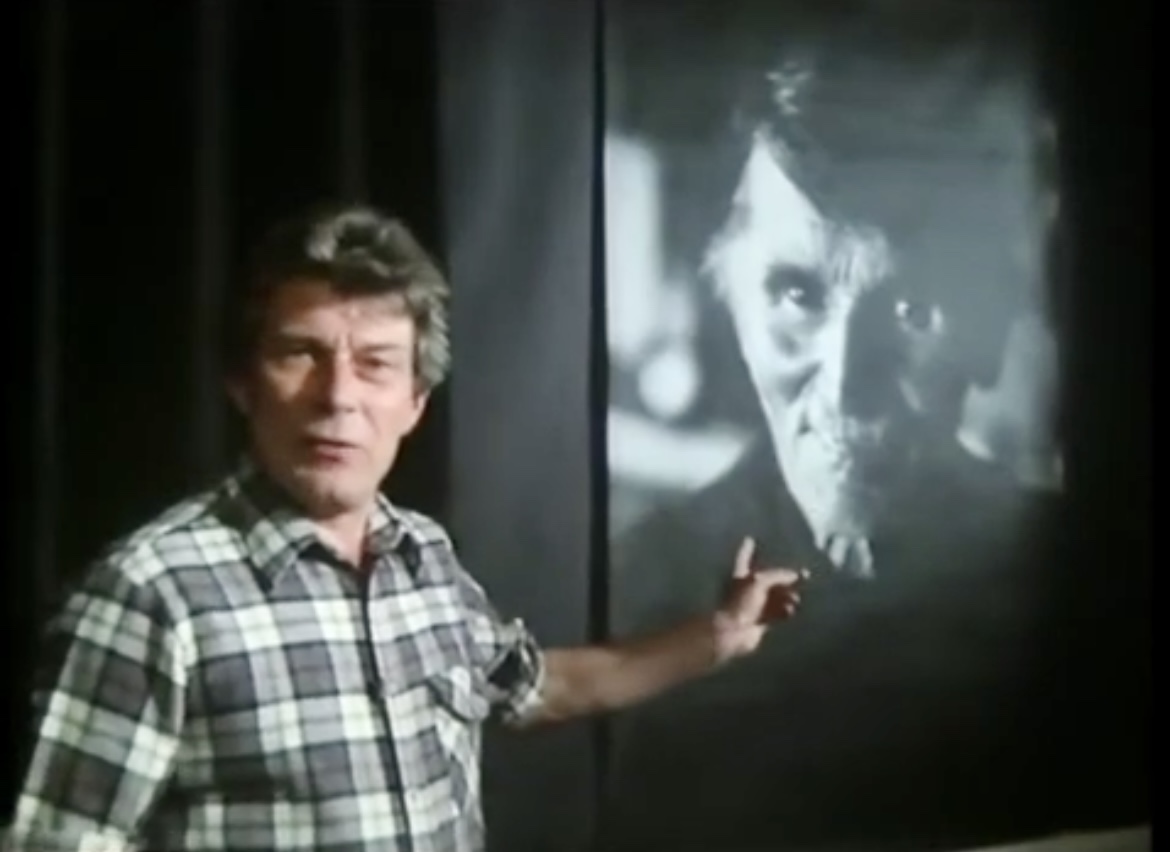
He suggests that cows are as much a part of peasant culture – and by extension our broader global culture due to peasants providing much of our food supply – as houses, fields and rivers. It is all one holistic system that has been operating in symbiosis with nature for thousands of years.
There is a moment in Pig Earth where Berger states that all of the work that a peasant family does in the fields over the 365 days of a year is purely to feed the family and their cows. Every single bit of it.
Of course, things have changed sightly since the 1970’s, but not as much as we might think. The vast majority of the world’s food is still produced by farmers who’s parents, grandparents and great-grandparents all worked the land – people who Berger would think of as peasants.
As we head into a future of less biodiversity, soil erosion, water shortages, constraints on resources like fertilisers and potentially a lack of energy to power things like machinery and agricultural equipment, the skills embedded in peasant culture, passed down through the generations will be needed more than ever.
Perhaps we should think a little more deeply before being so quick to dismiss dairy farming and all that it supports, as presented in a documentary like Cow.
 Fractalis - An ongoing journal