Welcome to Fractalis
The surface of the world can be so ugly and brutal. People can be horrible to each other at the drop of a hat.
But if you scratch away a piece of this surface veneer, even just a little, and take a look at what lies beneath, a whole different world begins to appear; a hidden realm that is accessible to anyone with the inquisitiveness and curiosity to see past the immediately obvious.
A world that has warmth, integrity, balance, nuance, wisdom. One that learns from its mistakes and isn’t quick to overreact. That values knowledge, but not at the expense of hard-won intuition and common-sense. A world that loves and creates and loves to create.
It’s this hidden world, secret in principle but accessible to everyone, that inspires everything that I write.
I must declare, not everything that I “publish” (extreme air-quote klaxon) ends up on this blog; I have other experimental avenues for my creativity, some pseudonymous, some not.
But this is a large window into one important corner of my creative workshop; where I can drop a block of wordy alabaster onto the bench and spend some time roughly shaping it into something that might be interesting, that expresses some truth, that may resonate with disenfranchised minds, that pokes and prods at reality in some exciting way.
It’s often rough and experimental, you may think it’s strange. This is the place I like to call Fractalis.
Why Fractalis?
When you begin to put the jigsaw pieces of our crazy beautiful reality together, a clear geometrical structure begins to emerge; one that is undoubtedly fractal.
Fractals are everywhere, and yet I wasn’t taught about them at school, I don’t hear about them in everyday conversation and it’s rare that I see them mentioned in popular culture.
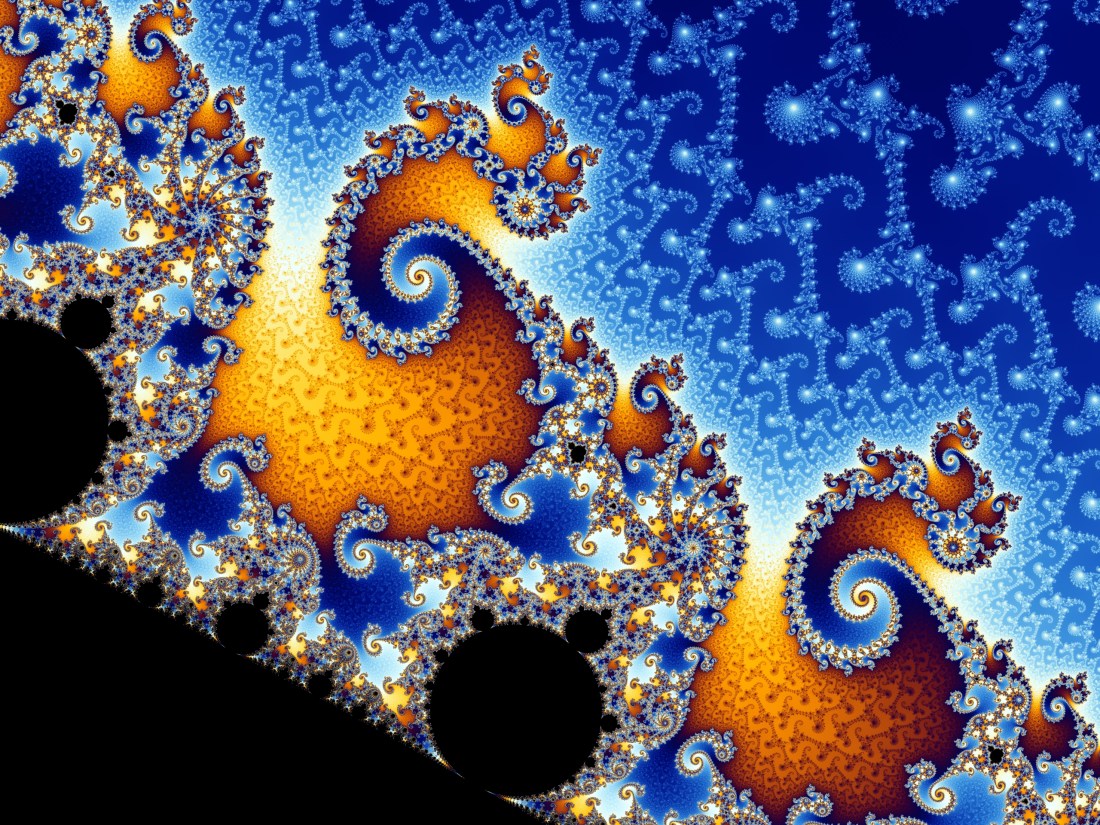
Fractals are basically geometrically repeating patterns that look the same no matter at what level of detail or magnification you look at their edges. In other words; the further you ‘zoom in’ on a fractal’s edges, you will still see the shape that you first saw. In their purest theoretical form, fractals are infinitely complex; the pattern will look the same if you continue zooming in on its edge forever.
So where can we look to find fractals? Have you ever looked at romanesco broccoli, and thought the pattern on its surface looks a bit strange? Well, that’s because its structure is fractal.
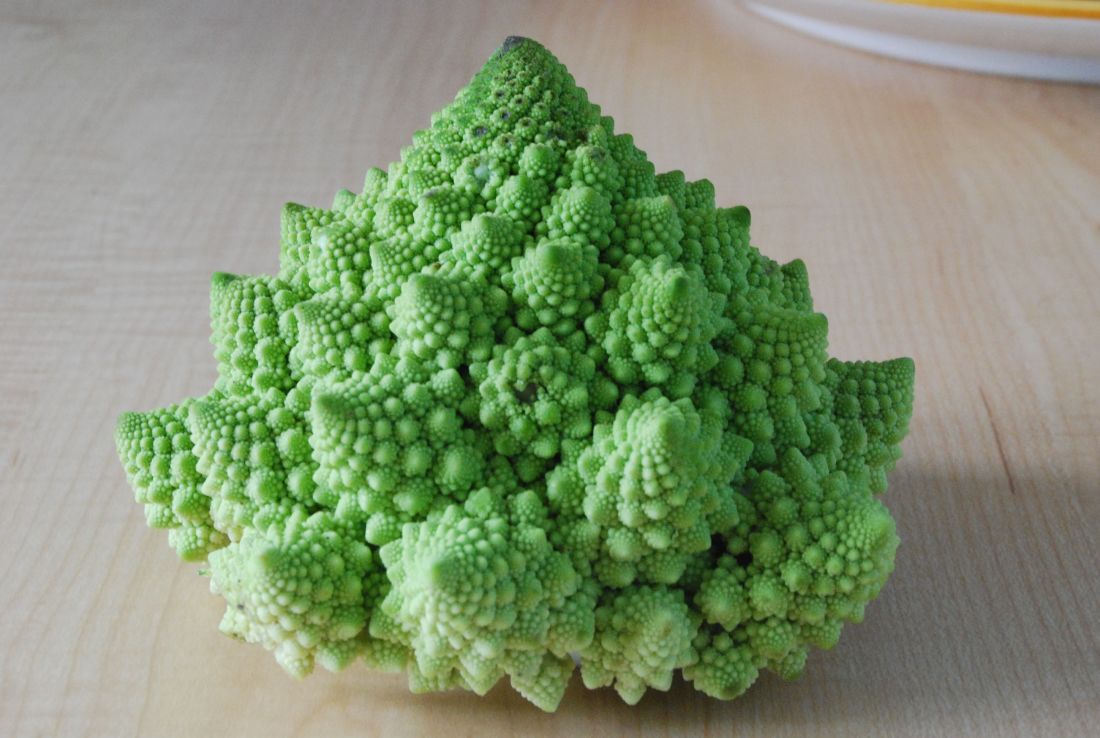
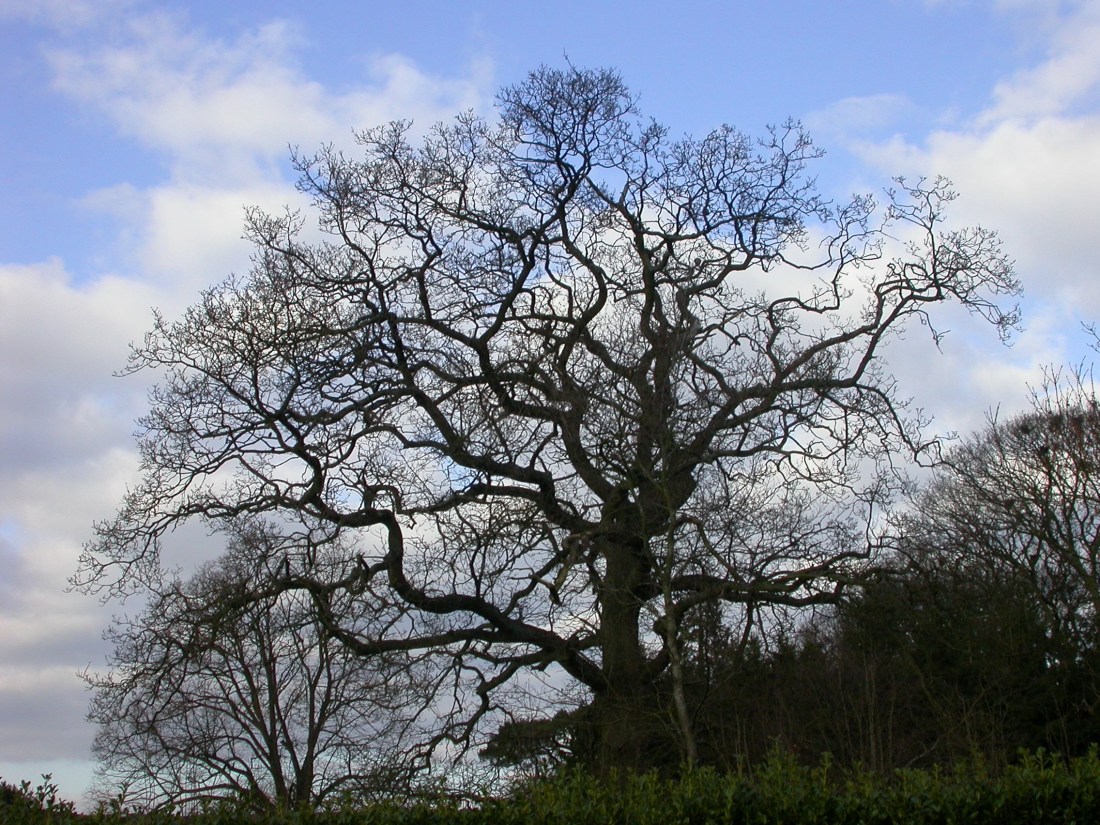
In fact, most plants grow in this way. Think of a tree, with large branches splitting off from the central trunk, slightly smaller branches splitting off from each of these branches, and slightly smaller branches still splitting off again, ad infinitum.
This is a really good practical example of fractal structure and is the natural way most flora grows, through division. In other words fractal geometry is at the very heart of our biological ecosystem.
Other examples where fractal geometry can be seen in the natural world are the blood vessel systems in our own bodies which branch out from a single vein or artery to create vast intricate networks; snowflakes and ice crystal formations; electrical lightning in the sky; and fluid flows that can be studied using fluid dynamics.
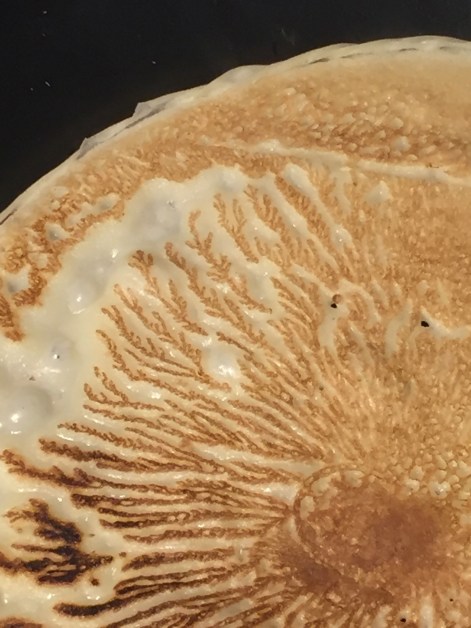
But these are far from the only examples. Once you understand fractal geometry as a basic concept and begin to look more closely at the world; you will begin to find fractals hiding in plain sight almost everywhere you look.
Take the concept of history. The more you look at it, the more it appears to subtly repeat itself in the same basic patterns and cycles. But history also has the strange quality that, once you “zoom in” and start to study a certain part of it in detail, its complexity intensifies and the deeper you look at it, the more complex it becomes. History therefore, is fractal.
 Fractalis - An ongoing journal