So many things in life come down to that viscerally emotional cliff-edge between fear and love.
It’s not always clear how fear and love are connected. They are not exactly polar opposites as much as forks in the road – individual choices, up for grabs at any time we choose to embrace them, that will take us towards very different territories of lived-experience.

I increasingly think of this dichotomy when it comes to my incredibly sporadic relationship with cooking.

I do often enjoy the process of cooking; the technical intricacies, the exactness, the alchemical feel, and I almost always enjoy the end results no matter how badly they turn out.

But I don’t always enjoy the process. More often than not, it’s the motivation that I struggle with – the act of suppressing the negative thoughts that crop up before I even step foot in the kitchen. What if the end result is a failure, even after diligently following the recipe? What if the resultant pile of washing-up I create makes me miserable and ends up sitting on the worktop for two days afterwards? What if the recipe assumes I have a certain technical skill that I do not possess as I have not attended a fancy cookery school, worked in a professional kitchen or even been physically shown how to cook by another person? (how do I coddle an egg, emulsify mayonnaise or sauté vegetables?). What if it requires that I have a certain implement or machine that every kitchen but mine seems to have tucked away somewhere? (no, I do not have a mandoline, a mortar and pestle or a pie bird).

The thing I have learnt, over time, with all of these fears however, is they are just that; irrational fears, with very little foundation in reality and which very rarely come to fruition if I’m brave enough to simply grab the bull by its horns and step foot in the kitchen to give something a go.

Whenever I remember the love I feel for cooking certain dishes or developing particular skills in the kitchen, my muscles loosen, my heart soars and the motivation to cook comes flooding into me like a breached dam. When I think about baking with my Grandma’s rock cake recipe, cooking a curry for a group of friends and even chopping vegetables with my favourite, super-sharp knife or frying something in my well-cared-for carbon steel pan; my fear drifts away and the love I have for the alchemical process of cooking washes over me.
Cows and Peasants

Andrea Arnold’s documentary Cow presents the life of a dairy cow as sad, hard and painful as a result of the way she is exploited for her milk, daily, for almost her entire life.

Although never doing so explicitly, the film suggests implicitly that, because of this painful exploitation, the very practice of dairy farming, one that has been carried out in almost every part of the world for millennia, should probably stop.

It’s hard to argue with this view.

The reality of a dairy farm, as presented by Arnold over the course of her 90 minute film, is pretty grim. We see newborn calves in distress as they are removed from their mother’s side, cows forced into pens to be unceremoniously impregnated by bulls and the indignity of older cows being forced onto wooden blocks in the milking parlour so that the farm-hand can fit the milking machinery onto their sagging udders.

I have a sneaking suspicion that the particular dairy farm presented in the film is a particularly humane example of those that span the globe.

But might there be more to the story of dairy farming than the apparent cruelty on display here?

John Berger would have thought so.

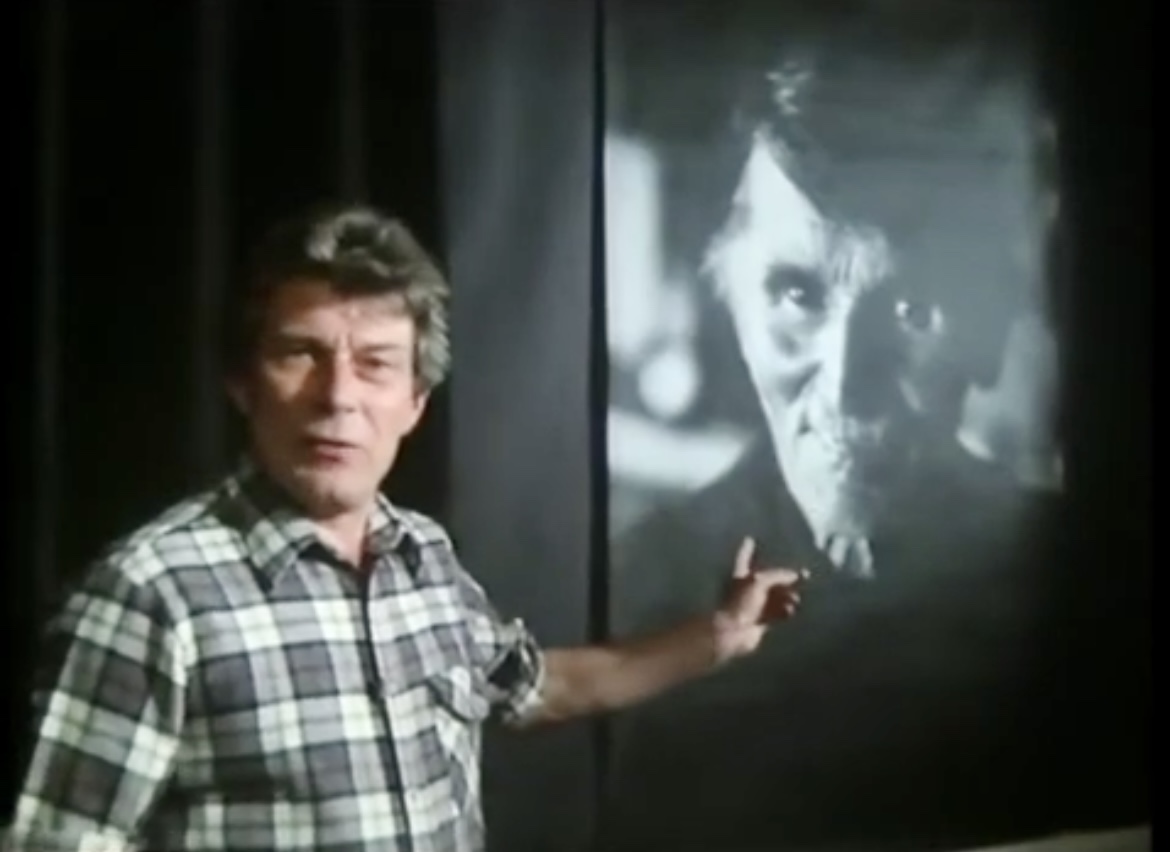
In his own doc, Pig Earth, based on the novel of the same name, which is in turn inspired by his years living in a farming village in the French Alps, Berger talks about what it means to be a peasant at a time when mass mechanisation is radically reshaping agriculture and pushing vast numbers of peasants off the land and into cities.

Berger notes that at that time (the late 1970’s), most of the world’s humans are peasants, working their little patch of the Earth for their whole life. Furthermore, the overwhelming majority of all the humans that have ever lived throughout recorded history were also peasants.

This is a startling fact that shouldn’t be dismissed and perhaps ought to be considered carefully by anyone who wishes to hand down judgements on what particular types of agriculture we should or shouldn’t be practicing.

But Berger goes further.

He argues that peasant culture is a highly evolved, complex, nuanced form of society that has developed over thousands of years to work in symbiosis with nature to overcome the immense challenges of feeding human civilisation in a holistic, natural and sustainable way.

He proposes that the mechanised, bio-tech led agro-business that is increasingly displacing peasants in the process of providing food for people can never do what peasant culture has been doing effectively for thousands of years now due to the inherent contradictions in its process and relation to nature.

Throughout Pig Earth, Berger provides lived, first-hand experience of the intelligence, wit, cunning, indefatigability and philosophy of peasants who work the land.

John Berger, Pig Earth (1979, dir. Mike Dibb)

He suggests that cows are as much a part of peasant culture – and by extension our broader global culture due to peasants providing much of our food supply – as houses, fields and rivers. It is all one holistic system that has been operating in symbiosis with nature for thousands of years.

There is a moment in Pig Earth where Berger states that all of the work that a peasant family does in the fields over the 365 days of a year is purely to feed the family and their cows. Every single bit of it.

Of course, things have changed sightly since the 1970’s, but not as much as we might think. The vast majority of the world’s food is still produced by farmers who’s parents, grandparents and great-grandparents all worked the land – people who Berger would think of as peasants.

As we head into a future of less biodiversity, soil erosion, water shortages, constraints on resources like fertilisers and potentially a lack of energy to power things like machinery and agricultural equipment, the skills embedded in peasant culture, passed down through the generations will be needed more than ever.

Perhaps we should think a little more deeply before being so quick to dismiss dairy farming and all that it supports, as presented in a documentary like Cow.

‘Extreme suffering’ central to culture of elite kitchens – study:

Staff in Michelin-starred kitchens in the UK and abroad have told researchers how pain – from burns to beatings – continues to be central to building respect and to demonstrate work ethic and character. But far from running from the violence, many embraced it as part of achieving success and inhabited a sub-culture that imbued suffering with “a dark, tawdry kind of beauty”.

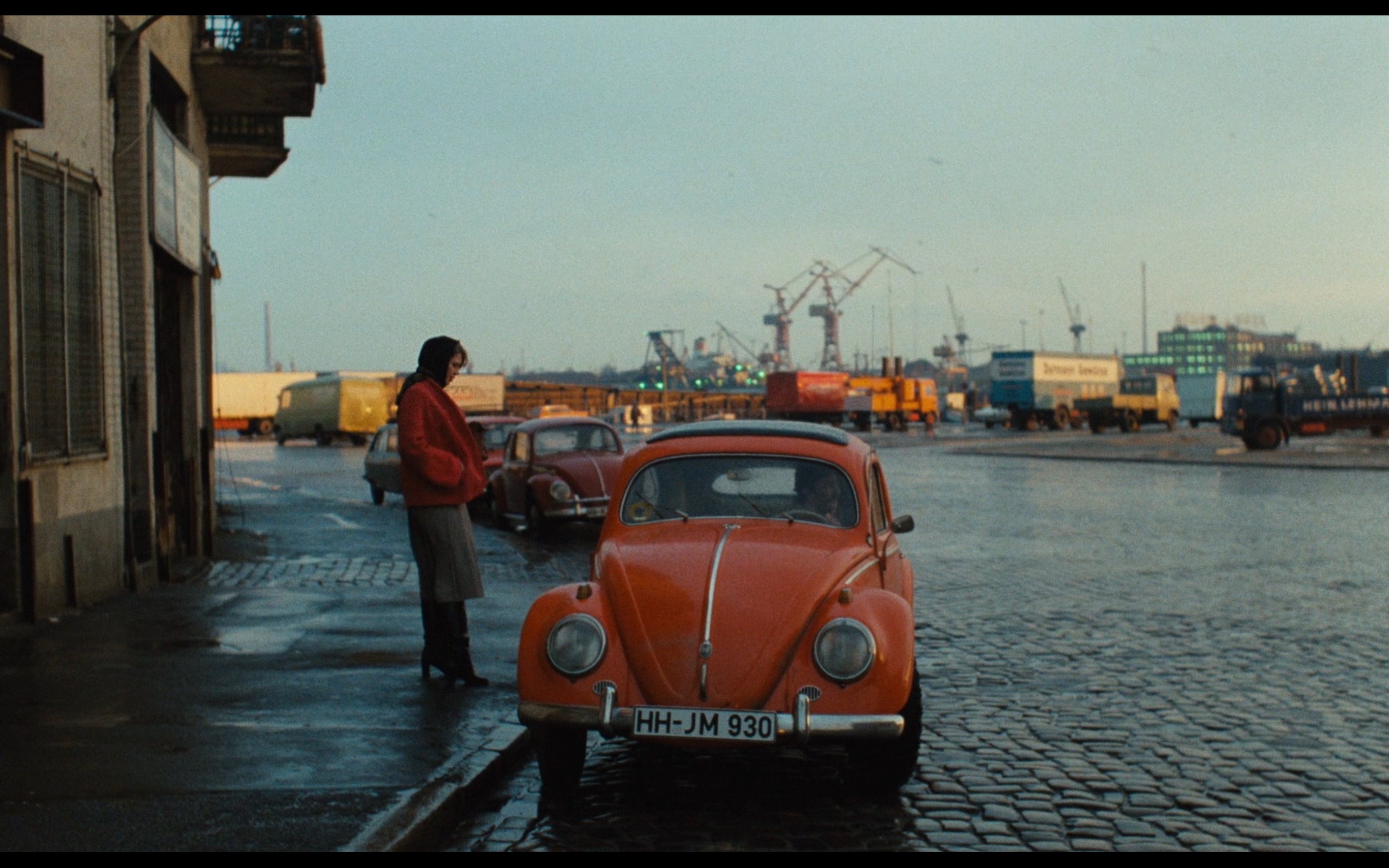
The American Friend (1977, dir. Wim Wenders)

The American Friend somehow manages to coalesce the inner psychological turmoil of the main character – a German maker of picture-frames recently given a terminal diagnosis – with the gritty urban landscape of 1970’s Hamburg and other cities.
It’s hard to think of a film that so effectively marries the inner mind with the the outer urban environment in such a tight way as Wim Wenders achieves here.
Both the inner and outer worlds depicted in the film seem to be decaying, falling apart at the seams. The problem for Jonathan and the family he supports however, is that decaying cities can be regenerated, whereas decaying bodies – not so much.

There’s much more to this story than terminal decay however. Wenders is a filmmaker inherently aware of the power of spirit and that’s hardly more apparent than in this beautiful piece of work, where he endows the light in every scene with a spiritual majesty that helps to reinforce the fact that there is always a little more to reality than material decay.

P.S. thanks for introducing me to the Old Elbe Tunnel which is cute A.F.

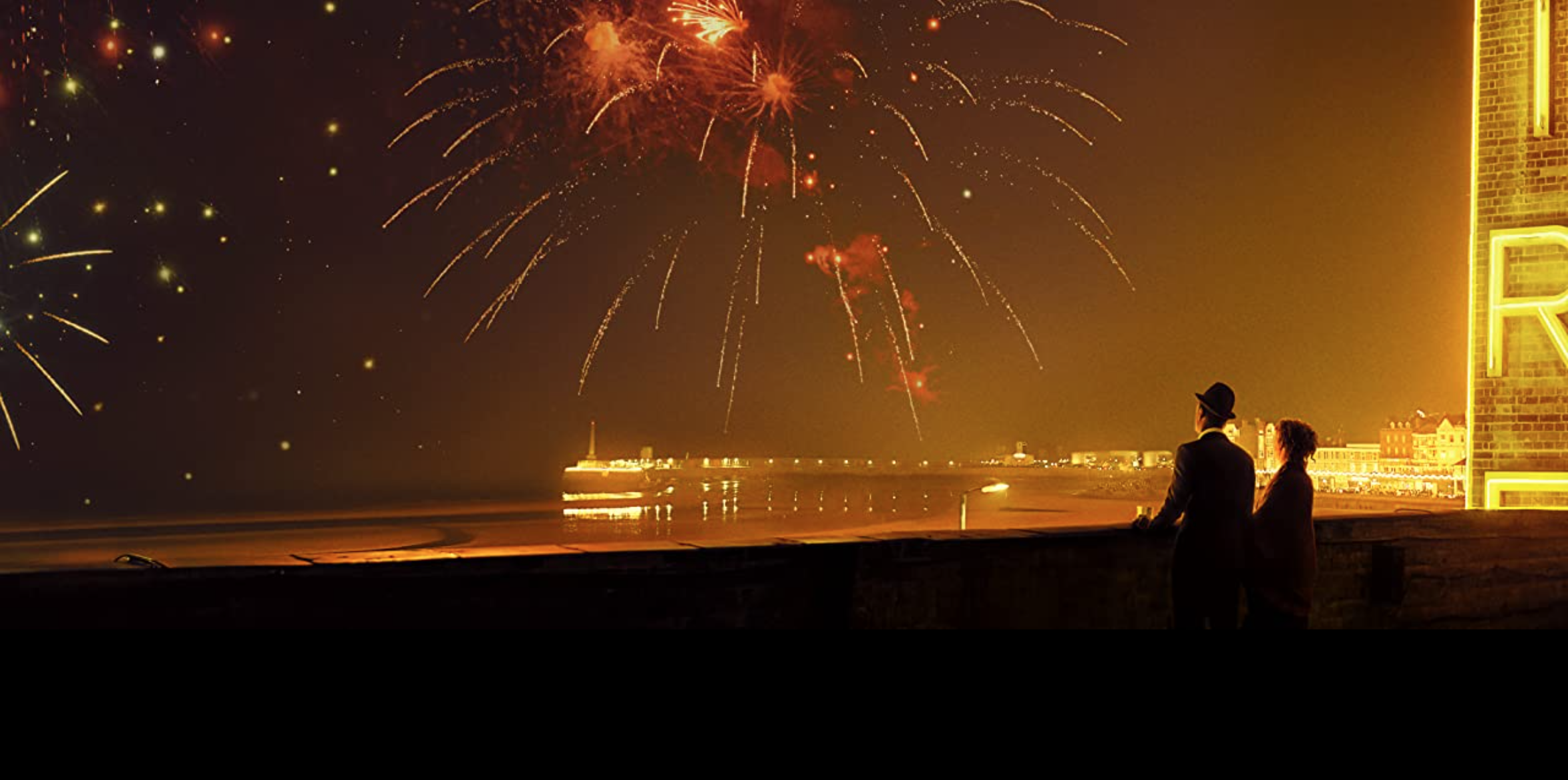
Empire of Light (2022, dir. Sam Mendes)

Life can be hard. It can grind you down as the years roll on by. But it’s by trying to find the light amidst the darkness that allows us to keep going despite all that bears down on us.

The light can take many forms; the stability of a tightly-bound community; the passion of a loving romance; the spiritual pull of great music; an afternoon on an empty beach; the transcendent beauty of the way Roger Deakins captures the subtle hope in melancholic morning sunlight. All these things and many more can send our hearts aflutter and furnish us with the spirit to push on. Whatever works. Just find the light.

16/03/2022

The raindrops dripping on the pavement outside are incessant. Things were fine when I stepped out this morning, but things often deteriorate unpredictably these days.

And yet we press on, as we must.


Speed feels, increasingly, to be the rule. Everything is getting faster, streamlined, efficient. But at what cost? It all makes me want to try and slow down. All this speed feels like a trick, a cleverly devised ruse by those soulless fiends to extract more value from their ‘human resources’.

In a time of incessant acceleration, when there is just so much ‘stuff’ bombarding us from all angles, what else is there to do but slow down and retrain our focus on that which is closer, more pressing, that which has a more tangible link to us and our immediate surroundings?


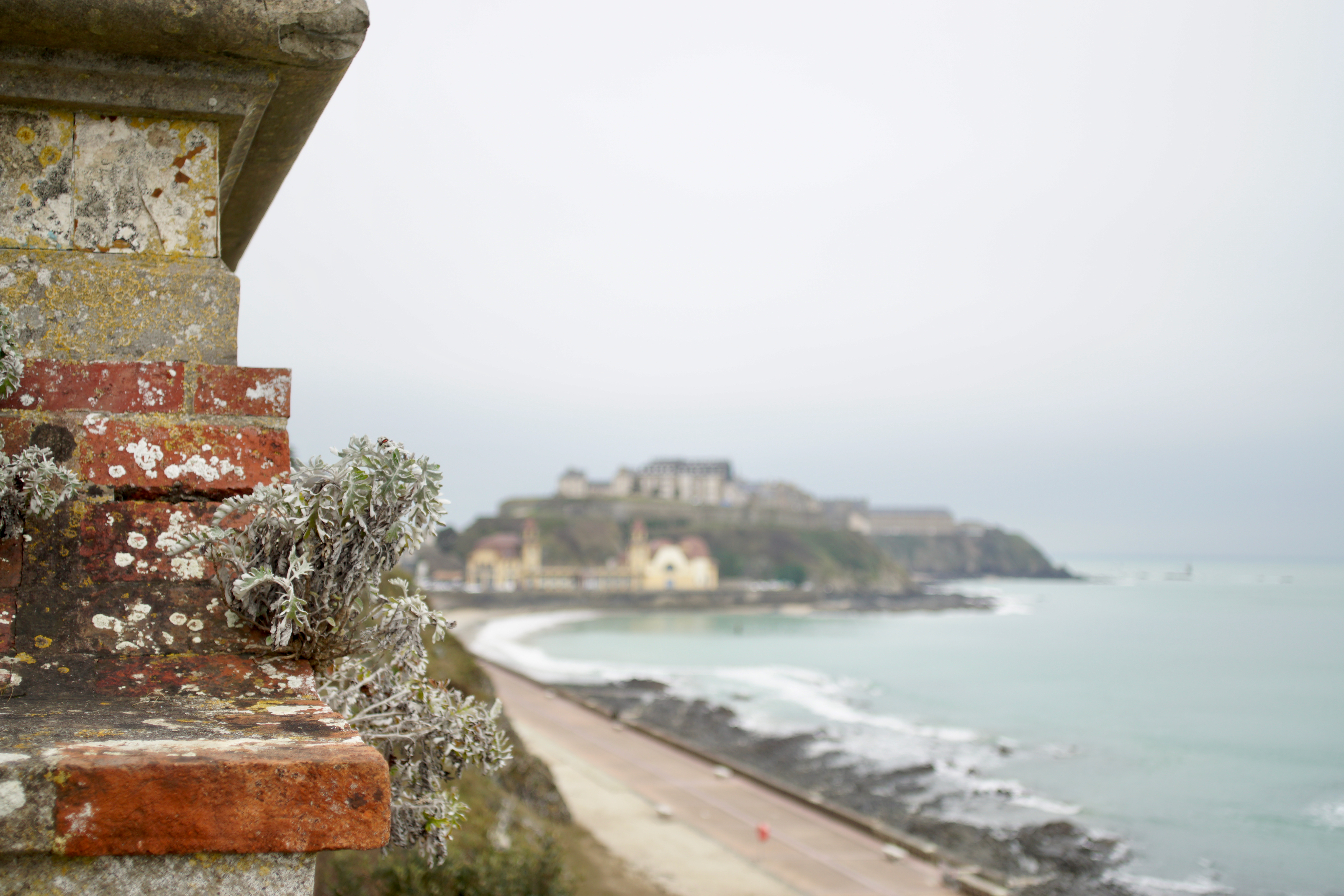
I happened to be in a French port town called Granville last week. I came across a small gateway halfway up a set of steep cliff steps leading to one of the town’s most beautiful houses. Between 1940 and 1944, the town was occupied by Nazi Germany. Without knowing for sure, I somehow have no doubt that Nazi officers would have been living inside that beautiful house perched on the cliff – just because they could. In the shadow of the cliffs there is also a grand casino, very much embedded in the history of the town. No doubt this was also a familiar haunt for bored Nazis stationed a thousand kilometres from home.

On top of the gatehouse, are a selection of decorative stones, bricks and finials. They can no doubt tell a few stories, as they say. But the decorative stones on that gateway, covered in mossy growth and standing firm in the face of many a storm, were there long before the Nazi fortifications were cast into the same cliffside and will no doubt still be there, reaching toward the grey sky long after we too cease to walk along those cliff paths.

‘This too shall pass’ they say. It’s a cliché of course, but like all clichés, there is more than a morsel of truth wrapped up in its quotidian exterior.

At the end of April, in a powerful essay by another writer, Odessa Moshfegh, I read this line about love: ‘Without it, life is just “doing time”.’ I don’t think she intended by this only romantic love, or parental love, or familial love, or really any kind of love in particular. At least I read it in the Platonic sense: Love with a capital L, an ideal form and essential part of the universe — like ‘Beauty’ or the colour red — from which all particular examples on Earth take their nature. Without this element present, in some form, somewhere in our lives, there really is only time, and there will always be too much of it. Busyness will not disguise its lack. Even if you’re working from home every moment God gives — even if you don’t have a minute to spare — still all of that time, without love, will feel empty and endless.

— Zadie Smith, Intimations – p.g.24

Interruption

I find it really, really, really hard to empathise with people who do this mid-conversation. But empathise we should, and we must also watch them like a hawk, because the slide into anti-social nihilism that this kind of behaviour indicates is one of the biggest threats to the shared project that we must all become in some way engaged.