How did the Space Shuttle survive the 1600°C temperatures of atmosphere re-entry?

“All civilisations become either spacefaring or extinct” – Carl Sagan

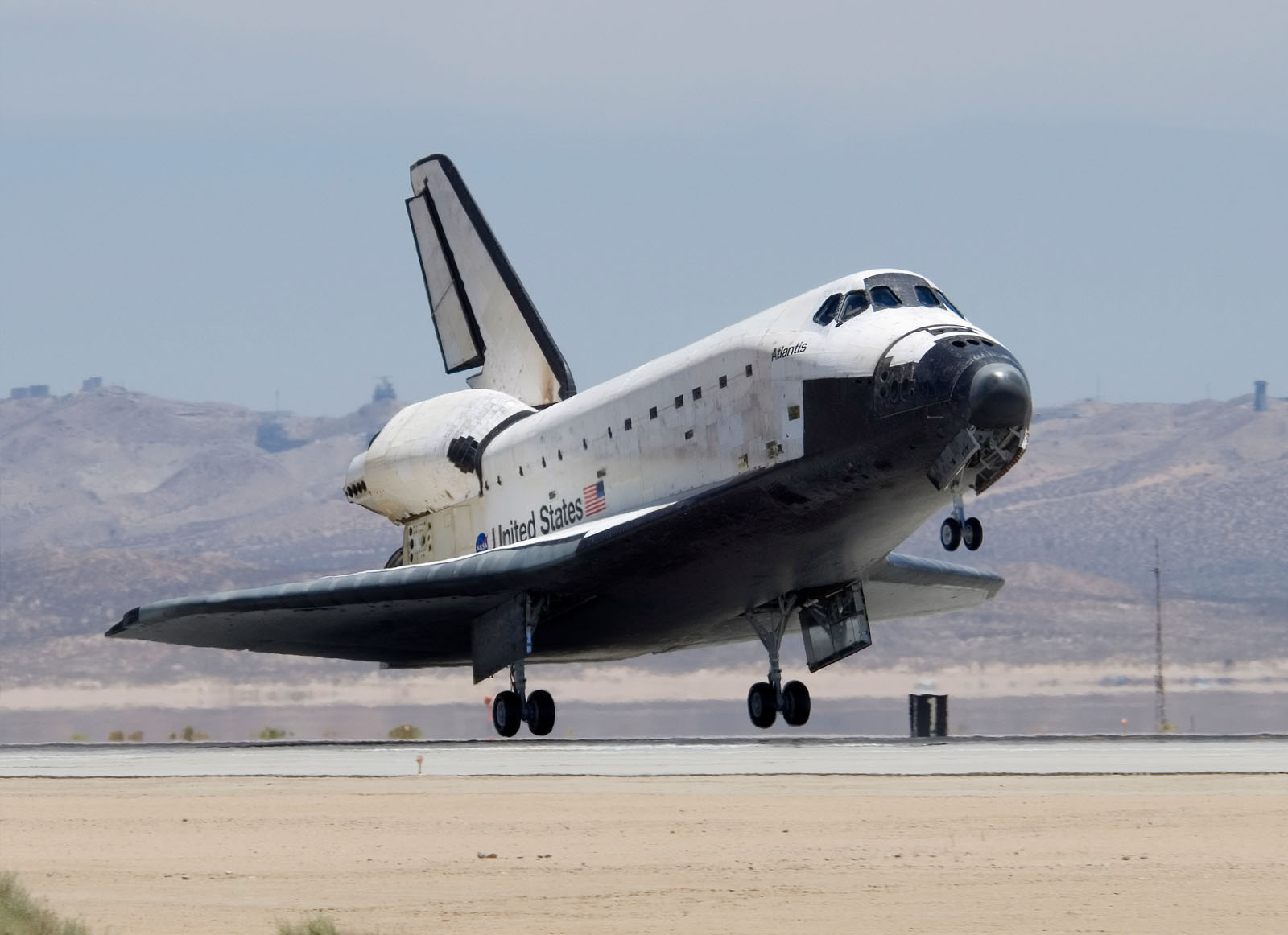
NASA’s Space Shuttle was a fantastic feat of engineering in many ways, completing 133 missions during its 30 year lifetime. There are numerous ingenious pieces of technology that allowed the Space Shuttle to repeatedly travel into space and return safely but today I want to highlight just one that blows my mind.

When NASA first started preparing to send human’s into space, it was clear that a way to protect them from the intense heat experienced during re-entry into the atmosphere would need to be found. When the Space Shuttle re-enters the Earth’s atmosphere it is typically travelling at over 17,000 mph and therefore the number of air particles hitting its body every second is huge, causing an immense amount of friction which in-turn leads to temperatures in excess of 1,600°C. The melting point of steel is around 1,370°C so it was clear that a much more advanced material needed to be found.

Decades of research was carried out, finally resulting in the reusable ceramic tiles that can be seen on the Space Shuttle. They are made from a material called LI-900 which mostly consists of silica (silicon dioxide) glass fibres. The genius of the tiles lie in their very low thermal conductivity. This means that heat energy travels extremely slowly between the atoms inside the tiles. The video below demonstrates just how amazing the tiles really are.

The demonstrator in the video explains that the blocks have been in the oven at 2200°F (around 1200°C) for “hours” and then proceeds to pick one up just seconds after it has been removed from the searing heat. The reason he doesn’t get burnt is because of the extremely low thermal conductivity of the tile, meaning it takes a long time for heat energy to be transferred from the tile to the demonstrators hand. It is important to understand however that the tile is still around 1200°C which shows that how “hot” something feels when we touch it has nothing to do with its temperature, but instead depends on its thermal conductivity. This idea is shown superbly by Derek Muller in the video below.

Great Quotes #1

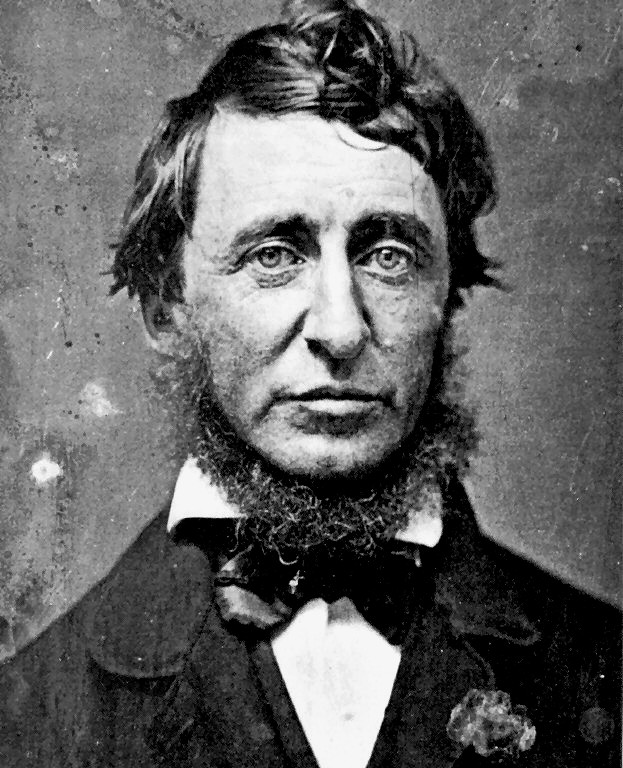
“What’s the use of a fine house if you haven’t got a tolerable planet to put it on.” 

~ Henry David Thoreau (1817-1862)

Many people feel the need to express their social and political beliefs but very few people actually follow through and live by the principles that they espouse. Henry David Thoreau was in this small minority and for this fact alone, will always have my admiration. The extent he was willing to go to in order to defend what he thought to be right was truly inspirational, and indeed Thoreau did go on to be a major inspiration to figures as legendary as Mahatma Gandhi and Martin Luther King Jr.

I feel that the above quote beautifully expresses a message that is even more important today than ever. In an increasingly individualistic world where we are encouraged to help ourselves and only ourselves, a message such as this – which reminds us that we should look outside of our immediate surroundings to find things in need of help and improvement – should be shouted from the rooftops.

If you want to read more about Henry David Thoreau, I can’t recommend his book Walden highly enough. It is a truly revolutionary piece of non-fiction which combines practical lessons on a range of life skills with satire and a healthy dose of civil disobedience.

Thoreau

Favourite Photos #4

2804844052_3eeb3a36dd

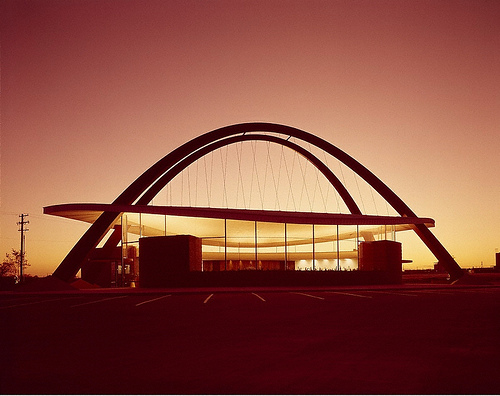
1964 | Julius Shulman – Founders National Bank Building/Bank of America

Julius Shulman was an architectural photographer who became famous in the 1960’s for his photographs of architectural modernism. I am a huge fan of modernist architecture with it’s beautiful converging lines and progressive style. Shulman’s photographs really show the style at its best and deserve to be more widely seen.

This particular photograph is one of my favourites by Shulman. Taken at magic hour, the photo manages to give the building an ethereal glow which almost makes it look like an alien spacecraft waiting to fly off into the night.

I may do a separate post about Julius Shulman in the future but in the meantime, if you want to see more of his pictures, there is a good selection here.

Folk Tale

Today I came across this fantastic little parable. Unfortunately I could not find an author/source for it.

A stranger walked through a village wearing a hat. It was painted red on one side, white on the other, green in front and black behind. Later that evening the villagers were sitting around discussing the stranger. One who had been working in a field to the west of the village described him one way, another who had been in a field opposite vehemently disagreed, while another who had followed the stranger into the village called both of them liars. The argument heated up. They began to fight.

Top 20 Films of 2012

This may get said every year, but 2012 was a truly great year for film. With new films from Malick, Mendes, Tarantino, the Wachowskis and Paul Thomas Anderson, it was extremely difficult to make this list. 2012 was an especially good year for documentaries too with a handful that had some really interesting things to say.

Before we move on to the actual list, an honourable mention goes to; Liberal Arts, Arbitrage, The Sessions, Sightseers, Ginger & Rosa, Les Miserables, Marley, Shadows of Liberty, McCullin, Moonrise Kingdom, On The Road, Frankenweenie, End of Watch, Babeldom and Canned Dreams.

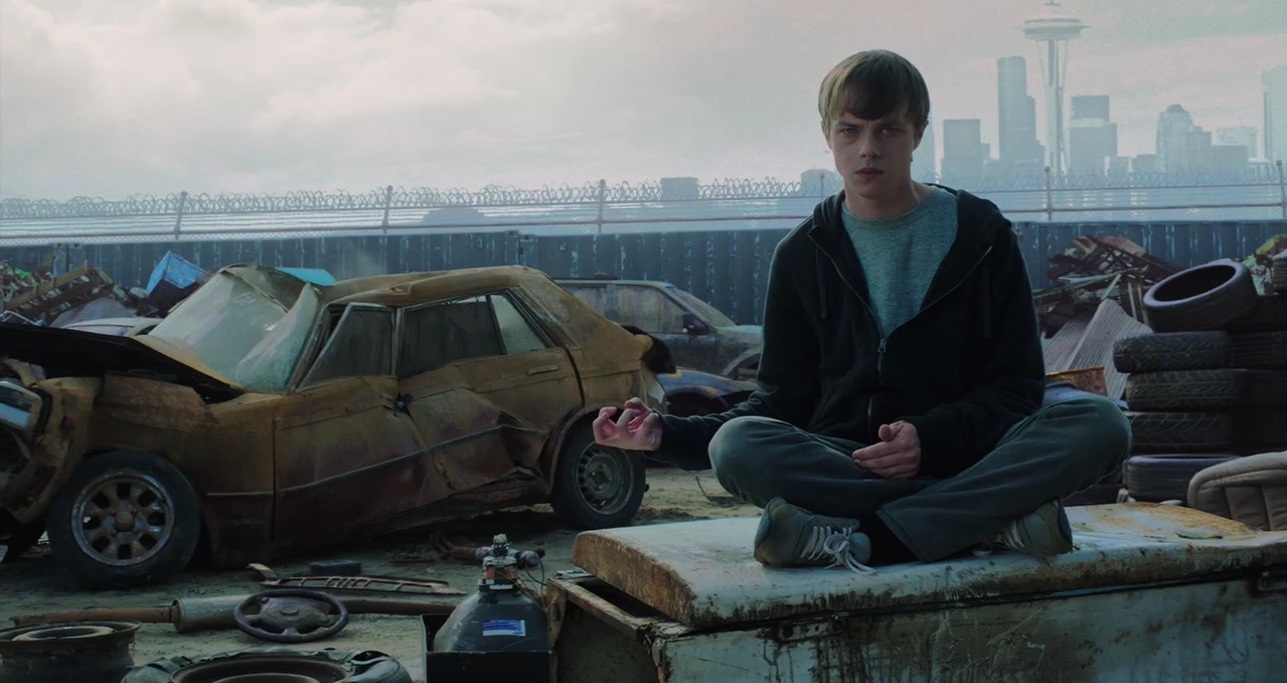
20. Chronicle
Chronicle caught me off guard. Released in the fifth week of the year, it was hidden amongst a cluster of Oscar contenders and initially looked as if it might be another Skyline. It turned out to be quite the opposite. The film takes a unique look at the possession of super-powers and has some very impressive special effects to boot. All-in-all, Chronicle is an extremely original film that builds until the action-packed finale.


19. Lore
The indoctrination of children with Nazi ideals by their SS parents is a subject many film makers would find hard to approach. Not Cate Shortland however. In Lore, she has crafted a beautiful yet poignant coming-of-age film that tackles some extremely interesting ideas. Set at the end of WWII, the atmosphere throughout is dark and at times close to apocalyptic. The film contains a huge amount of humanity however which only adds to its emotional strength.


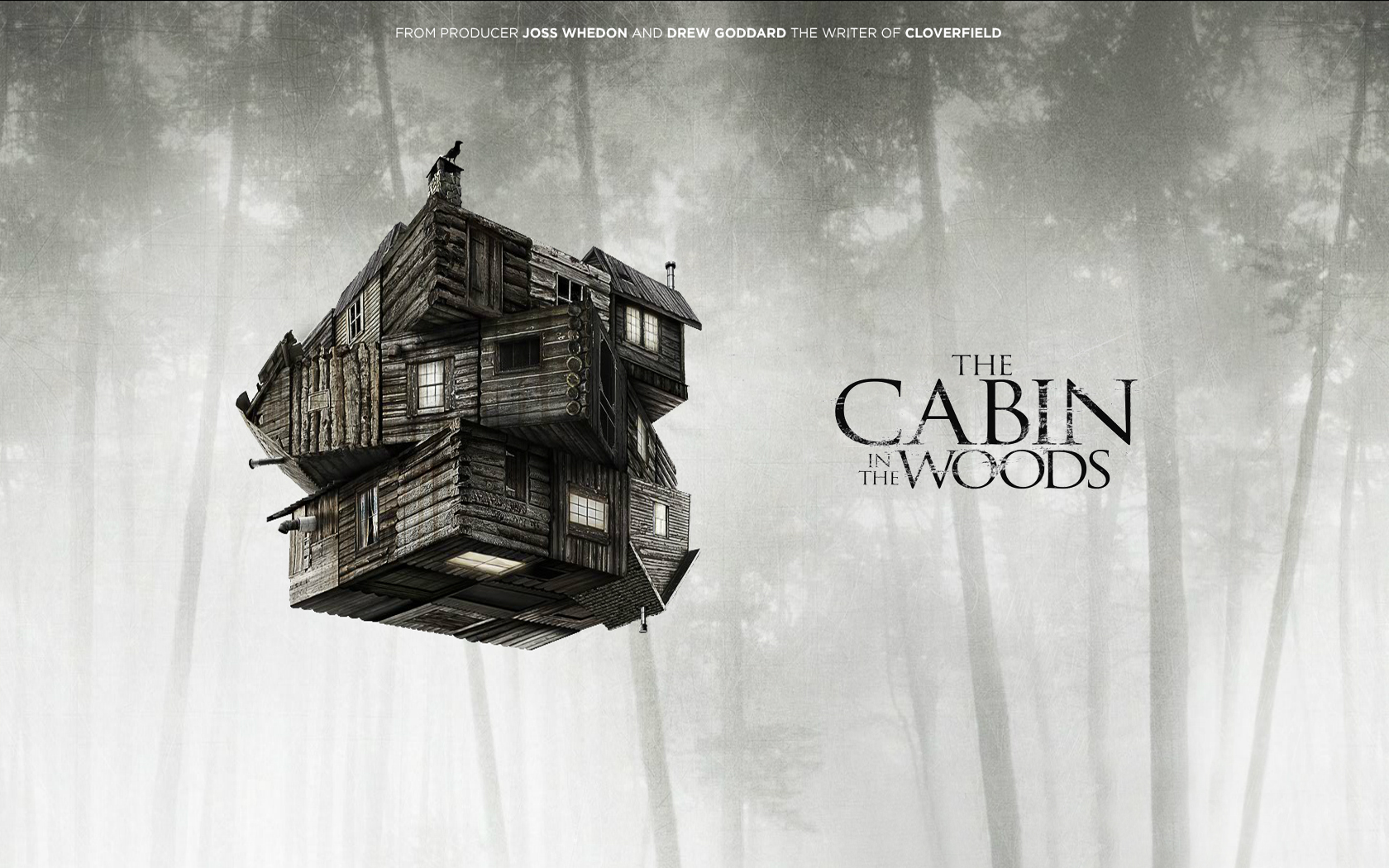
18. The Cabin in the Woods
Joss Whedon was probably best known in 2012 for his super-budget blockbuster Avengers but far superior in my opinion is his much smaller film The Cabin in the Woods. The less you know about the storyline, the better but I will say that the story – like Chronicle – is highly original and contains a healthy dose of satire.


17. Searching for Sugar Man
This is the story of how Rodriguez, a 70’s singer-songwriter from Detroit, failed to gain fame and fortune in his native country and spent his life living in poverty while simultaneously, unbeknown to him, selling millions of records in South Africa and Australia. The film tells the story with great energy and enthusiasm and is without doubt one of the best documentaries of the year.


16. The Imposter
Like one of those Channel 4 documentaries that seem to simply be a platform for exhibiting freaks on prime-time television, The Imposter draws you in by its premise alone. The film tells the true story of a 23 year old French man who claims to be the missing 16 year old son of a Texas family. It is a prime example of truth being stranger than fiction and will have you on the edge of your seat from start to finish.


"The Impossible"

15. The Impossible
Telling the true story of a family caught in the middle of the 2004 Indian Ocean Tsunami, The Impossible is both deeply harrowing and immensely up lifting. The film achieves a sense of realism that few modern films can equal by ditching the special effects in favour of a giant water tank.


14. Ruby Sparks
Ruby Sparks is another film that caught me off guard. At first it seems like your average rom-com but as it goes along, it begins to get darker and a lot more interesting. By the end it has posed some pretty interesting questions and will definitely be getting a re-watch from me.


13. The House I Live In
If The Wire isn’t enough to convince you that the War on Drugs has failed, this hugely insightful documentary by Eugene Jarecki will definitely do the job. By interviewing everybody from addicts to police officers, politicians to judges, Jarecki puts forward a cohesive argument that will leave all but the most authoritarian lawmakers questioning their previously held views on drugs.


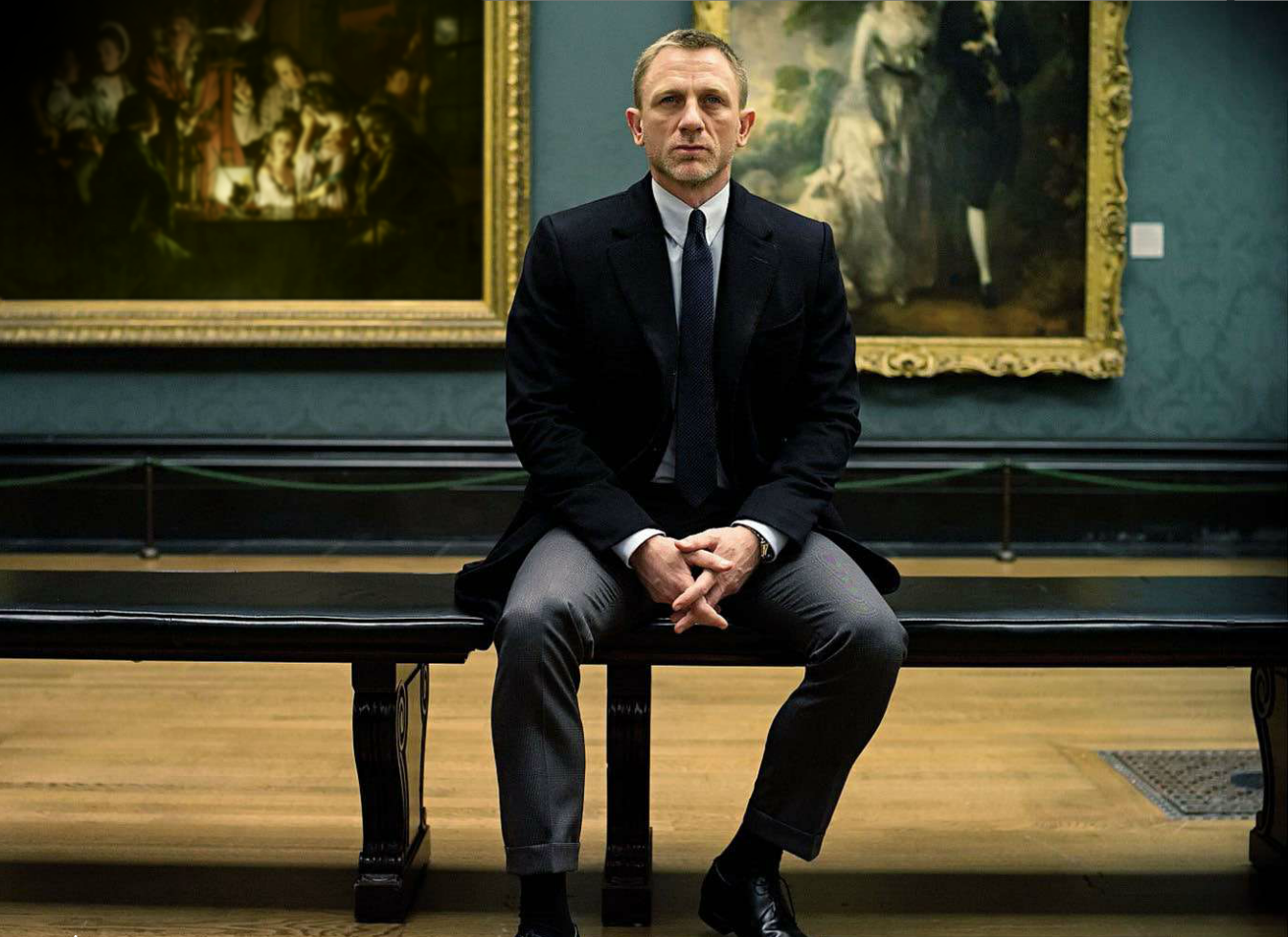
12. Skyfall
As soon as I heard that Sam Mendes was taking the reins of the 23rd Bond film, my ears pricked up. When it was announced that Javier Bardem was starring as the villain, I got excited. Skyfall doesn’t disappoint. By stripping it down and building a solid, character-driven story from the ground up, Mendes has perhaps created the best Bond film since Goldfinger. It’s gritty, sincere and most important of all, extremely well acted. Bond purists and newcomers alike will not be disappointed by this fantastic addition to the series.


11. Beasts of the Southern Wild
I have no idea how this low budget indie flick got a mainstream release but boy am I glad it did. The fact that Quvenzhané Wallis was only five years old when she played the leading role only adds to the fact that this is one of the best stories to appear in 2012. The enchantment and pure thirst for life that flows from each frame of this film is a true sight to behold.
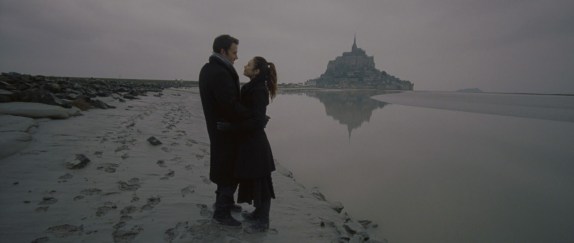

10. To the Wonder
Terrence Malick is a genius. That much is undisputed. Every single one of his films are simply dripping with his thirst and curiosity for life. There are many however that feel his more recent work has become slightly pretentious and meaningless. I wholeheartedly disagree. To the Wonder is not only a beautiful and mesmerising work of art, it also explores deep and complex ideas that few filmmakers are brave enough to touch.


9. Amour
Amour is an extremely touching film about love, growing old and one of the World’s greatest taboos: death. At times it is difficult to watch due to its sheer emotional gravitas but ultimately it is a triumph of cinematic realism that draws you right into the hearts of the characters involved.
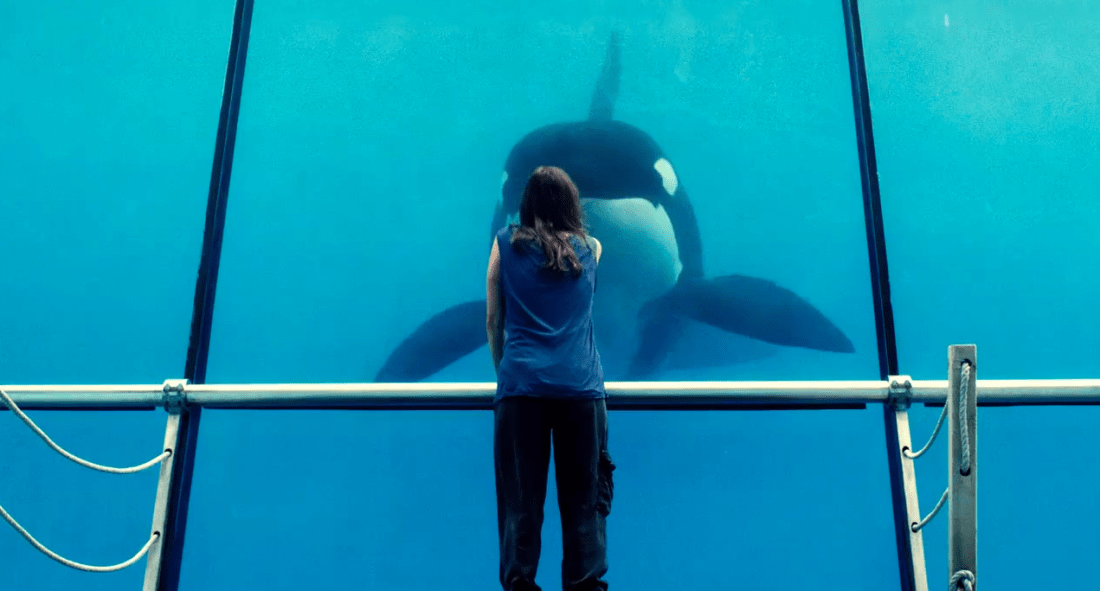

Rust and Bone

8. Rust and Bone
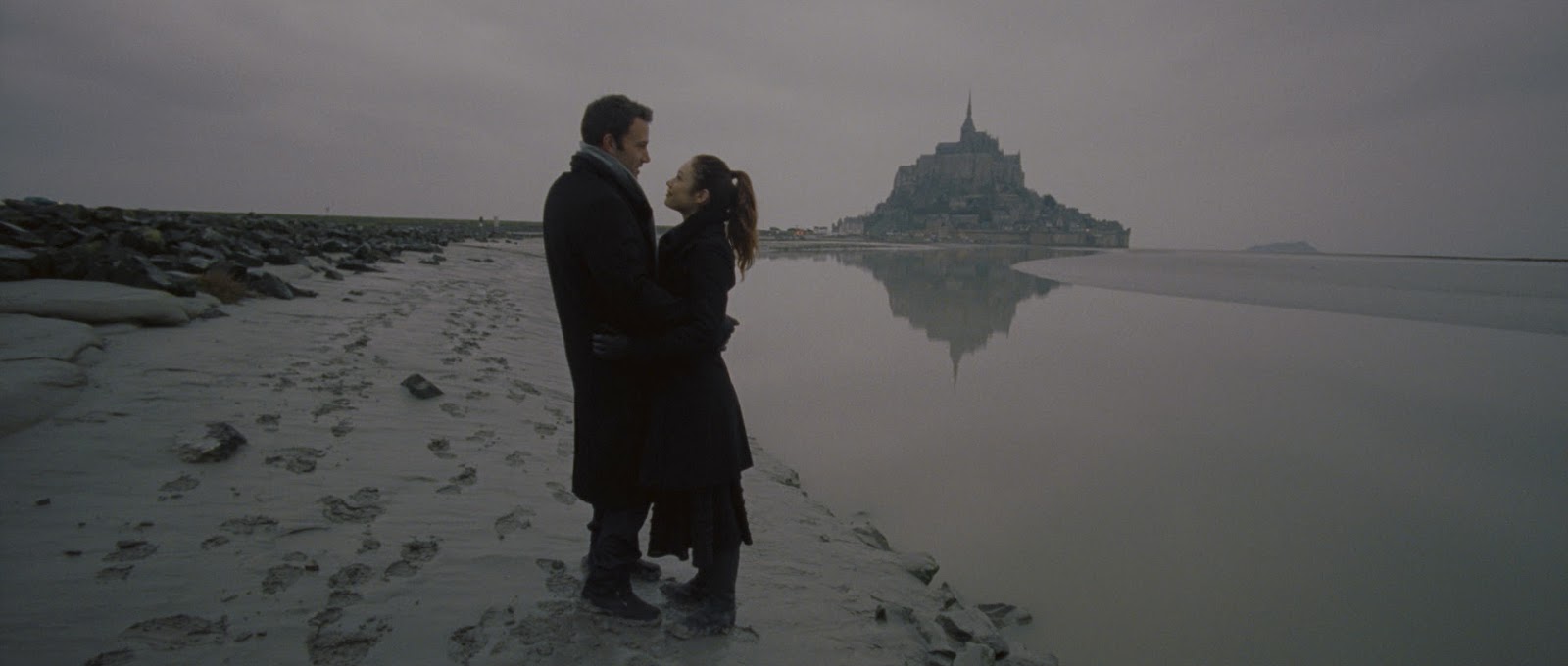
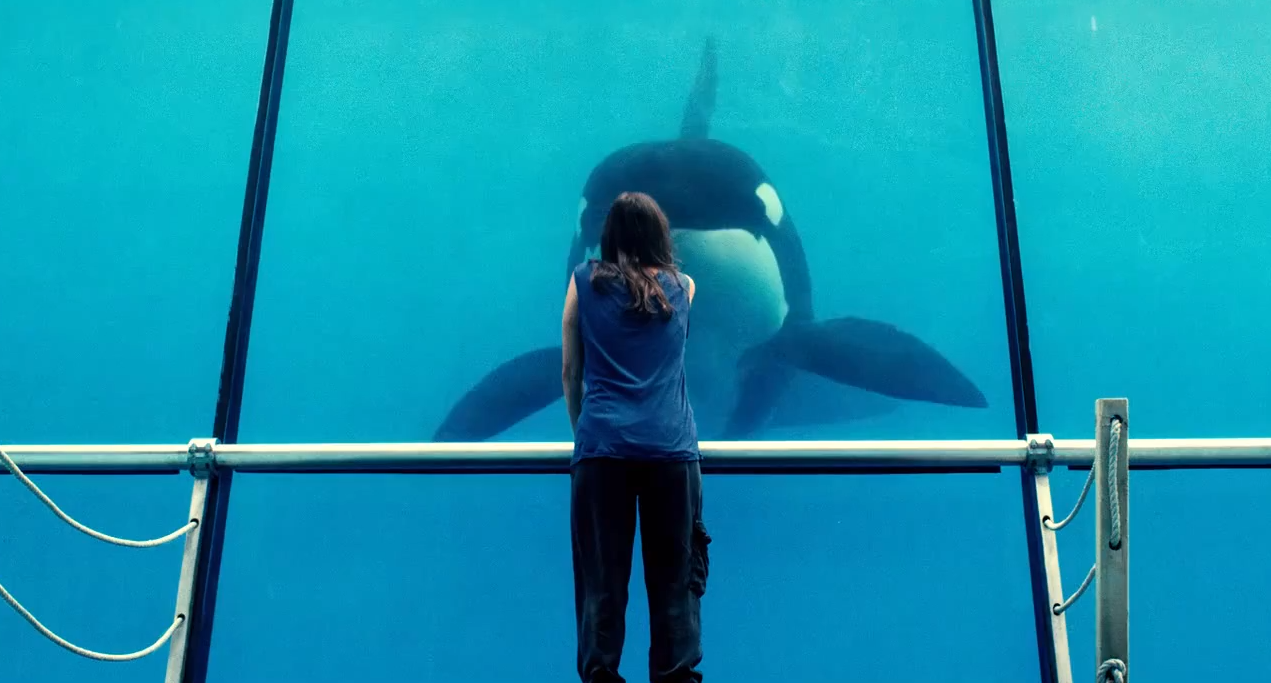
Marion Cotillard and Matthias Schoenaerts give two incredible performances in this gritty but beautifully told story. From start to finish it is somewhat of an emotional roller coaster ride, taking you from the lowest of lows to the highest of highs and proves that French cinema is in better health than ever.


7. Django Unchained
While not as good as some of his past work, Tarantino’s latest is still miles ahead of most other films. The script is fantastic and Tarantino manages to somehow tease yet another outstanding performance from Christoph Waltz. While the subtext of the film is not as ground breaking as some claim, it still raises some important points about slavery and civil rights. Whatever you may say about Tarantino, he is still one of the best writers in Hollywood today.


6. Silver Linings Playbook
Our society literally has no idea what to do with those who suffer from a “mental illness”. It is almost considered taboo sometimes and rarely gets talked about as openly and with as little stigma attached as it should. Silver Linings Playbook tries its hardest to correct this. On the surface, it can be seen as a simple rom-com but there is so much more to it than that. It is a beautiful character study of two people who both struggle to live their lives because of the mental illness from which they suffer. The thing that really draws me to the film however is, as Brett Easton Ellis put it: “Silver Linings Playbook grabs the audience by the lapels and shrieks Feel! Feel! Feel!”. In a World overwhelmed with mediocrity and an increasing lack of emotion, we need more films like Silver Linings Playbook.


5. Life of Pi
Life of Pi is a beautiful philosophy-rich film which is not only unafraid to ask big questions but does so with style, panache and sincerity. I’m sure much of this is owed to the original novel but Ang Lee still does a marvellous job of bringing this so called “un-filmable” book to the screen. The special effects are truly groundbreaking and likewise the cinematography is simply stunning, with a beautifully vibrant colour palate. As a family friendly hollywood film that leaves you not only with a smile but ideas to contemplate at the end, this is hard to beat.


4. Samsara
Like Baraka and Koyaanisqatsi before it, Samsara is a work of genius. I won’t say too much about it as I have already written an extensive piece about it here. I will say however that the art of film making doesn’t get much better than this and although it may be a bit too unorthodox for some people, if you let it simply wash over you, you may be pleasantly surprised.
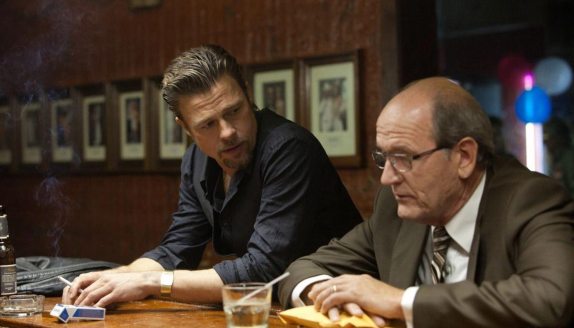

3. Killing Them Softly
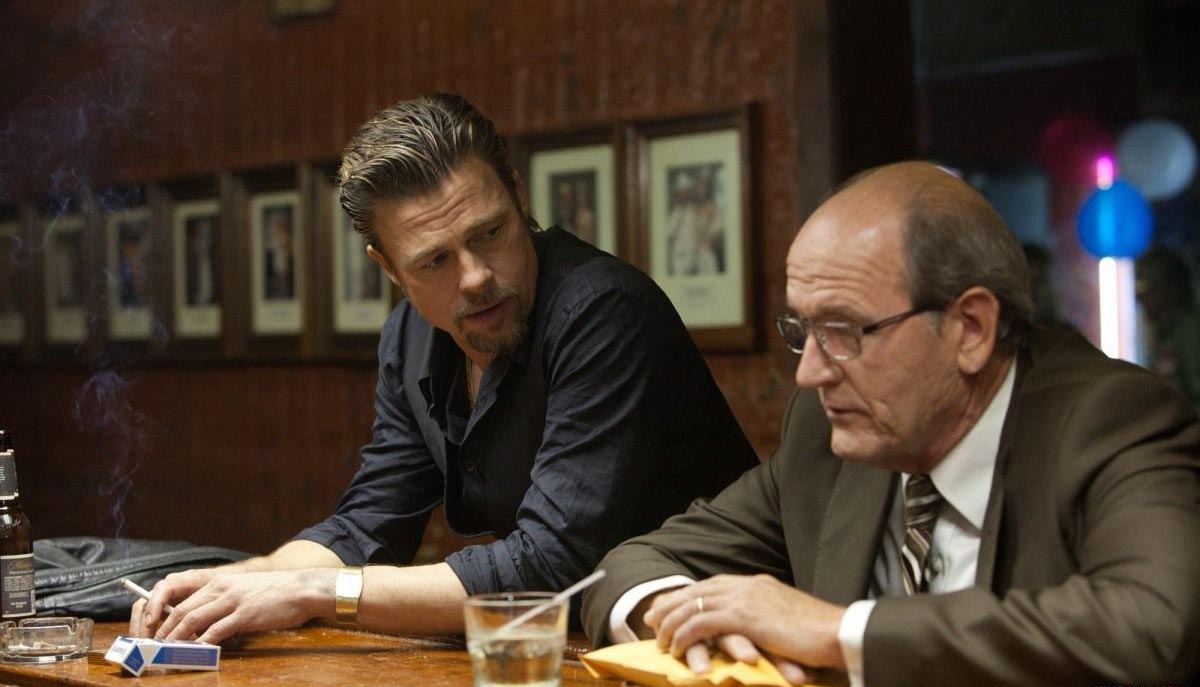
Killing Them Softly has to be the most criminally underrated film of 2012. On the most basic level, it is a fantastic noir thriller set around the criminal fraternity of a decaying American city. The film reaches much deeper than this however and intelligently juxtaposes the 2008 economic collapse with the collapse of the local criminal economy. The acting is top draw with Brad Pitt, Ben Mendelsohn and Scoot McNairy all delivering fantastic performances and the choice of music is also brilliant.
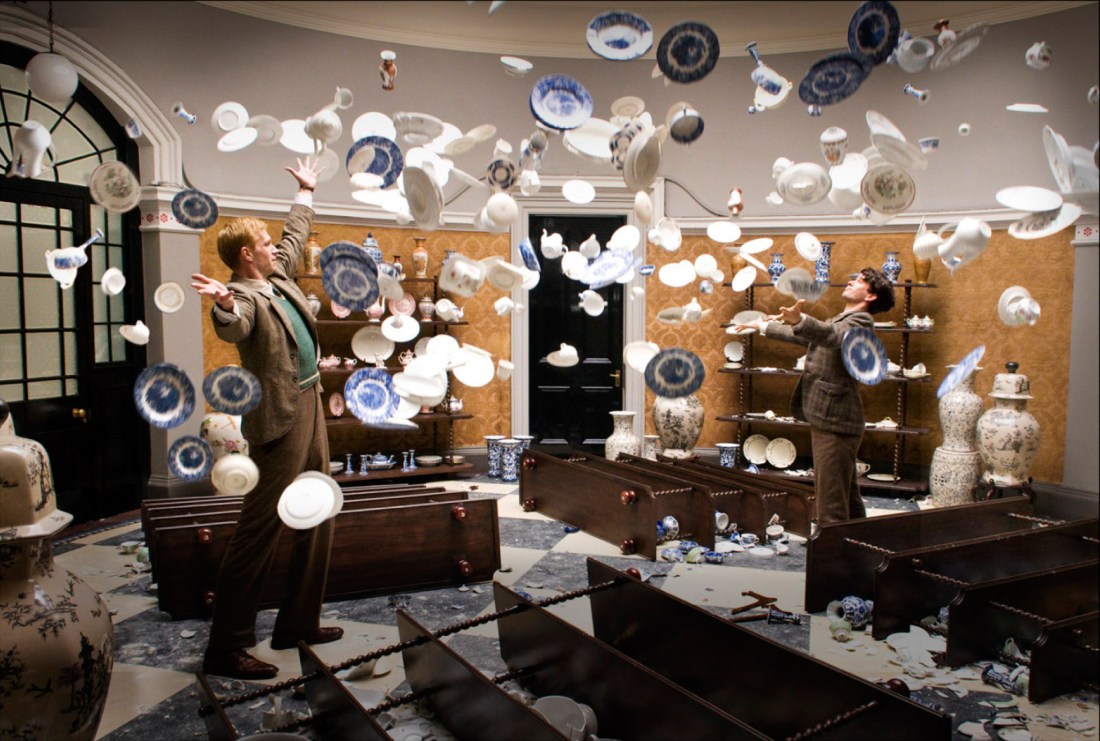

Cloud Atlas 2012

2. Cloud Atlas
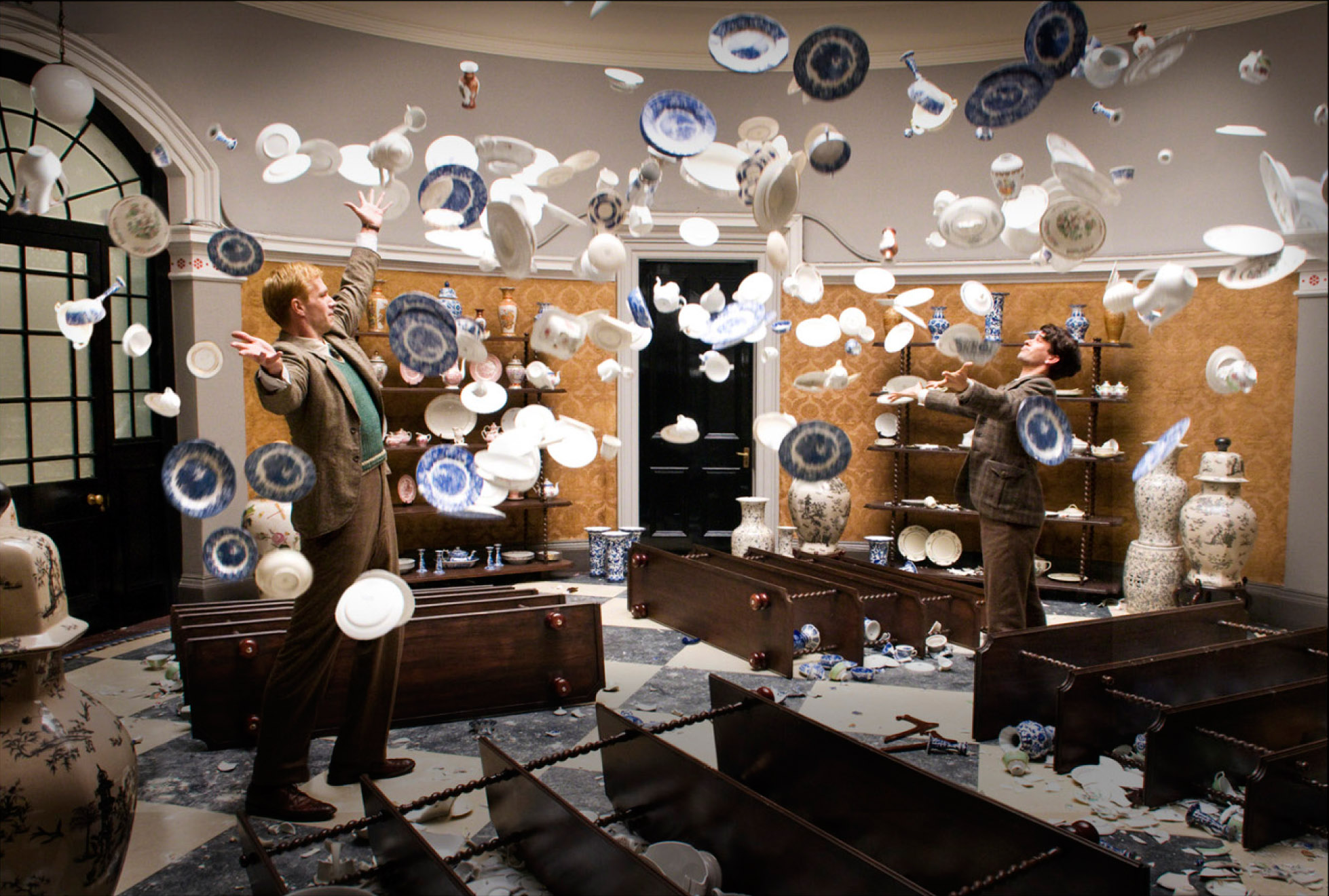
In any other year, Cloud Atlas would be number one on this list. It is a very special film and I believe its true artistic value will only be realised in the years to come. It is impossible to describe the plot due to its sheer complexity, spanning 6 story lines in 6 completely different time periods from 1849 to the 24th century. I don’t think I have ever seen a film that has so much intellectual ambition while still presenting it in a format that is easily accessible. I still need to watch it again before saying anymore about it as there is so much that I missed the first time around but if there’s one film you see in the near future, make this it.


1. The Master
Paul Thomas Anderson is arguably the greatest living film director and The Master shows exactly why this is the case. From start to finish, it’s an absolute film making masterclass. PTA has some magical ability to squeeze the performance of their career from his leading actors and this is never more evident that in this film with Joaquin Phoenix and Philip Seymour Hoffman both giving performances better than any other in 2012. It is simply criminal that neither won an Oscar. The acting is only a small part of what makes this film a masterpiece however. The script, including the subject matter covered is truly fantastic but we have almost come to expect this from PTA these days. The cinematography is some of the most beautiful this year, shot entirely on 70mm film which makes it almost pop off the screen. I also had high expectations for Johnny Greenwood’s score which certainly didn’t disappoint. All in all, The Master is in a league of its own and I can’t see a film this decade coming anywhere near it, let alone this year.
The Greatest Movie Theatre in the World?

It may not look like much from the outside but this old New York movie theatre-turned church is one of the most ambitious pieces of theatre architecture I have ever seen.

It was built by the Loew’s cinema chain in 1929 as one of its five flagship “Wonder Theatres” in the New York Area. As you head inside through the entrance lobby, you begin to realise that this is no ordinary theatre….

When you finally see the theatre itself, it’s hard not to be taken aback by the sheer scale of the place and the amount of detail that has been put into every aspect of it….

The design attempts to imitate a traditional Spanish/Mexican town and the level of detail used to achieve the illusion is truly extraordinary. There is even a night sky effect including stars painted onto the ceiling.

It is truly amazing that such an architectural gem has managed to survive in such great shape after so many years. If nothing else, the theatre demonstrates the importance of preservation in the modern age. At a time when so many works of architectural beauty have been lost forever by over-eager property developers looking to make easy money, it is encouraging to see a piece of our cultural heritage still looking so fine.

The thing that strikes me most about the theatre however is how it demonstrates the striking lack of inhibition in 1920’s America. People weren’t afraid to put big and bold ideas into practice. If you’re going to build a movie theatre why not make it the most exciting movie theatre in the World? Design just doesn’t seem to happen on this scale anymore and that’s a real shame.

All of these pictures are from scoutingny.com, a fantastic blog by a film location scout based in New York. There are not only lots more pictures of this theatre on the blog but also hundreds more posts about the mind-blowing architecture that New York has to offer.

Favourite Photos #3

1941 | John Collier

This picture was taken on the world famous main concourse of Grand Central Terminal in New York. Click the image for a high res version.

I love how everybody in the photo is standing still except for the female figure in the middle who seems to be traversing the concourse with a sense of purpose while also exuding an air of mystery.

I guess it goes without saying, but I feel the man who created Grand Central’s cathedral-like architecture also deserves some of the credit for the beauty of this photo. Mr Whitney Warren, I salute you.

The Asch Experiment

Over the last 150 years the field of Psychology has attempted to explore the Human mind by applying the scientific method to the ways in which we think and act. Now and again, certain individuals have demonstrated deep insight into the Human psyche, sometimes by conducting a groundbreaking social experiment. One such experiment was carried out in the 1950’s by Solomon Asch and shows just how easily we can be influenced by a group of people.

The Asch experiment is fascinating because, like all good social experiments, it confronts us with shocking truths about Human behaviour that we may not have recognised before. In a World where individualism is increasingly encouraged and people seem to be afraid of the idea that we don’t have total control of our actions, the work of Solomon Asch acts as a timely reminder of how easily we can be influenced.

Blind Willie Johnson

The life of a blues musician in 1920’s America was notoriously wrought with hardship and poverty. Blind Willie Johnson however may just have had it harder than the rest.

Willie Johnson wasn’t born blind but as his moniker suggests, by the time that he started writing music he had lost his sight in a horrific ordeal. As the story goes, his stepmother was beaten by Willie’s father one night after being caught with another man. She then reacted by throwing lye into Willie’s face leaving him permanently blind.
Not much is known about the life of Blind Willie but we can be fairly sure that he remained poor for most of it, regularly busking in order to collect enough money to survive. In the early 20th century, America was still extremely hostile to black people and Willie turned to the church to find solace from the hardships of daily Texan life. This can be heard in many of his surviving songs which contain a deeply spiritual tone. The songs that Willie recorded during the 20’s and 30’s are extremely haunting but they also have a strangely uplifting quality to them.

In 1945, tragedy struck Blind Willie Johnson’s life for the final time when his house burnt to the ground and having nowhere else to go, he took to sleeping on a pile of damp newspapers in the ruins. This led to him contracting Malaria in the hot Texan weather and dying within weeks. At the time of his death, Willie would have no idea that his music would go on to shape the Blues genre and therefore indirectly influence much of the music produced in the last 50 years. Perhaps his greatest legacy is the inclusion of the above track onboard the Voyager spacecraft in 1977 as an example to Alien lifeforms of Human achievement. By now, Voyager 1 will have exited the solar system over 18 billion kilometres from Earth and therefore acts as the perfect metaphor for the infinite reach of Blind Willie’s music.
Blind Willie Johnson is just one of a number of truly brilliant Blues musicians and Blues as a genre is just one small piece in the rich tapestry of staggering musical achievement, but there is something truly special about Blind Willie’s music. Some timeless, powerful force that speaks through the ages about the pain and suffering of mankind and as long as talented musicians continue to be influenced by his incredible music, as long as Voyager 1 continues through space carrying “Dark Was the Night…”, Blind Willie Johnson will live on.