Favourite Photos #2

1990 | NASA – Pale Blue Dot

This photo, dubbed the “Pale Blue Dot” by Carl Sagan, was taken in 1990 as the Voyager 1 spacecraft exited the solar system after a 12 year mission exploring its far reaches. Travelling at 64,000 km/h and at a record distance of 6 billion kilometres from Earth, the probe had completed its primary mission and was therefore at the disposal of NASA scientists when on Valentines Day 1990 Carl Sagan, one of the greatest scientists of all time who worked as an advisor to NASA, suggested that Voyager 1 be turned around to face Earth in order to get a photograph at this unimaginable distance.

The result is the photograph above which shows Earth as a minuscule dot in the centre of the brown band on the far right. The great thing about the photo is how it shows the true insignificance of the planet we call home. I think we need photos like this to remind us that we aren’t as important as we sometimes like to think we are on this tiny rock in the middle of nowhere.

The Train That’s Faster Than a Plane

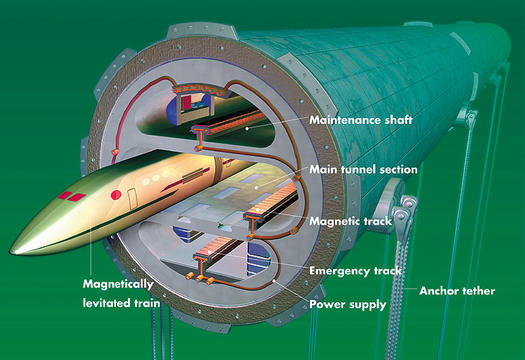
Transatlantic Maglev VacTrain illustration

Imagine boarding a train in London and arriving in New York less than an hour later. Sound too good to be true? This could soon become a reality thanks to something called a “vacuum tube train”. The idea is to take existing maglev technology – which involves using electromagnets to propel a train along a track which it never actually touches – and embed it inside an airless tube to eliminate air resistance. This will allow speeds of over 5,000 mph to be achieved and finally make super-fast intercontinental travel possible.

Maglev technology has been around for decades but the first commercial high-speed line didn’t open until 2004. This line runs for 19 miles between Shanghai and Pudong International Airport and reaches a nippy 268 mph, making the full journey in just 7 minutes. A much longer route is currently under construction in Japan and will link the capital Tokyo with the cities of Nagoya and Osaka by 2027 and 2045 respectively.

There are many advantages of maglev over conventional high-speed rail. First of all, a maglev system requires a lot less maintenance due to the fact that the train floats above the track. A normal train must have parts replaced every few months due to general wear and tear and tracks must be replaced every couple of decades due to frictional degradation. Maglev trains on the other hand have a much longer maintenance schedule due to having no moving parts and their tracks can last much longer as they are never actually in contact with the train.

Secondly, maglevs are a lot safer than conventional trains for a number of reasons. As maglev trains only float a few millimetres above the track, any loss of power would result in the train simply dropping onto the track meaning a derailment is impossible. Also, as all of the trains are controlled by a central computer system, collision avoidance systems can be used to eliminate human error and prevent two trains ever colliding.

Thirdly, maglev trains are much more power efficient than conventional trains as they only require energy to overcome air resistance instead of a combination of air resistance and frictional resistance between the train and the track. This, combined with the fact that they are powered by electricity instead of fossil fuels mean that maglev trains are much better for the environment than any other current form of transport.

As awesome as maglev trains are, like all technology, they have limiting factors. The major limiting factor for maglevs is air resistance. The density of air at ground level means that they will eventually hit a speed and and power efficiency limit. The current speed record for a maglev train is 361 mph which is very fast in it’s own right but is only 4 mph faster than the conventional rail speed record. In order to reach much higher speeds, air resistance must be greatly reduced. The only way to achieve this is to embed a standard maglev track inside a tube which is under partial vacuum.
This will not only allow speeds of over 5,000 mph but will also mean that hardly any energy – in this case electricity – will be consumed to reach those speeds. Part of the energy used to accelerate the train can also be regained using regenerative braking as the train slows down.
Vacuum tube trains have the potential to be the fastest, most reliable and most energy efficient form of transport in history. They really show their worth over extremely long distances such as between continents where they make even planes – long thought to be the pinnacle of super-fast transport – look slow. The most amazing thing about them however is that we already have the technology to make them a reality. So what’s stopping us? Some might say the high costs, but as fossil fuels start to run out and put our environment at more extreme danger in the coming years, the exponential rise in the cost of out current forms of transport may make “Vactrains” look cheap. Ultimately there are many possible ways we could be travelling around the World in the future but I doubt any will be as fast, clean, reliable and safe as vactrains.

Favourite Photos #1

1864 | George N. Barnard

This is a photograph of a view from the Capitol in Nashville, Tennessee during the American Civil War in 1864. Click the image for a high res version.

I love the atmosphere of this photo. It reminds me of that feeling you get when you go outside just after it’s rained heavily and you’re all dry but the streets are soaking wet. I also love the way the man almost seems like one of the statues, frozen in time.

The photo is from a website called Shorpy which is absolutely amazing and I highly recommend taking a gander. It contains a huge archive of photographs mostly taken in the USA between 1850 and 1950. More are added every day and the best thing about the site is that all of the images can be viewed in super high resolution which is extremely rare for vintage photographs.

Nuclear Fusion: An End to Our Energy Worries

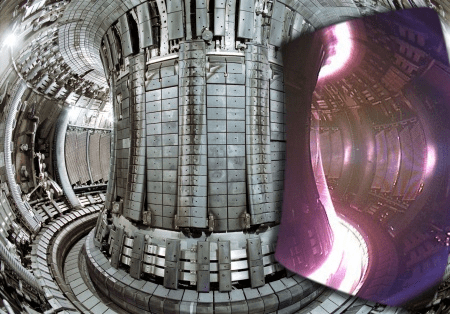
JET plasma

Every second around 500 million tons of hydrogen is fused into helium inside the centre of the sun, creating temperatures of up to 15 million degrees and producing enough energy in the form of gamma rays to meet the current global energy demand 25 trillion times over. The gamma rays then commence their journey to the surface of the sun which can take tens of thousands of years. Once they reach the surface, the gamma rays have lost enough energy to become visible light and it takes just 8 minutes for them to reach Earth, bathing is in beautiful sunlight. All of the energy we use has reached Earth this way and therefore life itself is directly dependent on this process know as nuclear fusion inside the core of the sun.

We live in uncertain times. This is never more evident than when looking at the World’s energy supply and rates of consumption. As the population increases to staggering levels over the coming decades, demand for energy will sky rocket. Fossil fuels are running out and their use must be curbed anyway if we want to limit the devastating impact of climate change. Power from nuclear fission has it’s benefits in a post-carbon energy supply but also has a number of significant drawbacks. Renewable sources such as solar, wind, wave and geothermal are fantastic ways to generate energy but can’t be relied upon to solve our energy needs in the short term. Therefore, if we are going to meet the huge energy demands of future generations, there is only one option: carrying out nuclear fusion here on earth.

Nuclear fusion has the potential to create huge amounts of electricity. The key raw material needed for fusion is lithium which can be found, amongst other places, in sea water. It is estimated that all of the sea water on Earth contains around 230 billion tonnes of lithium which would be enough to meet the current global electricity demand for a staggering 60 million years. Even more astounding is if a slightly different fusion reaction was carried out that does not require lithium but instead solely uses the hydrogen isotope deuterium, the sea water on Earth contains enough fuel to meet the current global electricity demand for 150 billion years! That’s 30 times longer than the projected remaining life of the sun.

Like nuclear fission, fusion also releases no carbon dioxide into the atmosphere which is crucial in the coming decades in order to limit the effects of climate change. Another major advantage of nuclear fusion is the lack of any long lasting radioactive waste. Whereas fission produces waste that remains dangerous for thousands of years, the waste produced by fusion only remains dangerous for around 50 years and is therefore much easier to control.

Due to the extremely high temperatures required to carry out fusion, there is also no chance of a meltdown accident occurring as any loss of power to the reactor would simply result in the temperature rapidly decreasing and any fusion reactions automatically stopping.

Maintaining nuclear fusion reactions here on Earth is a huge engineering challenge but if it can be achieved it will truly put an end to all of our energy worries and is therefore of paramount importance. Just remember, there is a clean, safe and plentiful alternative to burning fossil fuels and it could be producing our electricity sooner than you think.

Boardwalk Empire: A Hint of Coen

Boardwalk Empire is the latest in a magnificent line of long-running HBO series’. It is currently in its third season and contrary to my initial prediction, is getting better and better as it rumbles on. The show is set on the East Coast of the US in the 20’s/30’s and centres around the effect that the Prohibition has on a variety of characters, both real and fictional.

There are many things that make me keep watching the series including the fantastic quality of the acting. From Steve Buscemi as Nookie Thompson based on the infamous politician Enoch L. Johnson to Michael Stuhlbarg as high class gangster Arnold Rothstein, there is a huge amount of acting talent in Boardwalk Empire. I also can’t get enough of the fantastic noir feel of the series which manages to maintain a vivid colour palette while still providing that beautifully dark noir tone. I feel that my love for 1920’s America may have something to do with my admiration of the series though as it is simply bursting with 20’s music, fashion, architecture and cars.

One thing that is becoming more and more apparent as the show continues however is it’s startling closeness to the artistic style of the Coen Brothers. From the pitch-black comedy we’re used to from films such as Fargo to the philosophically-rich dialogue that runs through most of the Coen’s work, the more I watch Boardwalk Empire, the more it seems like one super long Coen Brothers Masterpiece.

Even the actors wouldn’t be out of place in a Coen Brothers film, with Steve Buscemi being a particular favourite of the Brothers, starring in five of their films. Stephen Root is also a series regular who has starred in three Coen Films as well as Michael Stuhlbarg and Kelly Macdonald who have each appeared in a single Coen film.

I’m not sure of the reason for these apparent stylistic similarities. I can’t seem to find any serious link between the Coen Brothers and Boardwalk Empire, so either a large number of the cast and crew are Coen Brothers fans or my Coen obsessed mind is seeing stylistic similarities which aren’t really there. Maybe it’s a combination of the two. Either way, Boardwalk Empire is, in my opinion, rapidly approaching the dizzy heights of its legendary HBO cousins. Will we eventually be mentioning it in the same sentence as The Wire and The Sopranos? Only time will tell. In the meantime, soak up this Coen-esque delight, you won’t regret it.

Samsara and the Cyclical Nature of Reality

Let me start by saying that Samsara, like so many other documentary films in recent years, is an amazing experience. It has its roots in Baraka, director Ron Fricke’s previous all-encompasing exploration of life, the universe and everything, but it’s real roots lie in the 1982 film Koyaanisqatsi for which Fricke was the cinematographer.

In my opinion Koyaanisqatsi is one of the greatest documentary films ever made, if not one of the greatest of all genres. It provides a mesmerising collection of moving images, cut together expertly into a montage of flowing beauty to convey ideas about the perils of over-consumption, un-sustainability and the misuse of technology. However I believe there are two key things that set Koyaanisqatsi apart from most other films. Firstly, the score written by Phillip Glass is one of the most original pieces of music I have ever heard and fits perfectly with the images on screen. Secondly, the cinematography in every single shot of the film is perfectly captured and oozes pure beauty thanks to Ron Fricke’s expert skill.

This brings us onto Samsara which Fricke directed as well as shot and edited. Although I believe it doesn’t quite reach the mountainous heights of Koyaanisqatsi, I still think it is an incredible film which explores a number of interesting ideas. I want to talk about one idea in particular that the film portrays and which really resonated with me: the cyclical nature of reality.

Samsara (which itself translates from Sanskrit to “continuous flow”) has strong themes of flowing cycles, rebirth and construction/destruction running through it. For example, the film juxtaposes some of civilisations tallest buildings and most advanced pieces of engineering with shots of upturned cars and damaged houses. The film doesn’t show what caused this damage, but like so many other parts of the film, it is clearly trying to show that what rises up in glory must at some point fall with a whimper. I.e. the only constant in the universe is change.

One striking scene in the film shows a group of Buddhist Monks painstakingly building a sand mandala. Mandalas have huge spiritual significance in Eastern religions with the word itself roughly translating to “circle”. The shot lingers for a long time on the intricate detail of the mandala and extreme close-ups almost show individual grains of sand being placed to form part of the brilliant whole. Later in the film, we return to find the Monks destroying the beautifully symmetrical work that they had evidently put so much time into. Once again, we see the idea that what is created must be destroyed to maintain the cyclical harmony of nature.

You don’t have to look far to find evidence of the cyclical nature of reality. The atoms that make up every single cell in our body will one day disassemble and go on to form something or someone else. The sun will rise tomorrow morning and then set the following evening. The seasons will continue to change year after year. The water that falls as rain will find it’s way down a river to the sea, back up to the sky and then begin it’s journey once again. Thanks to the wonders of quantum mechanics applied to the field of microscopy, we can now even show that single molecules such as benzene have a cyclic structure (see image below).

Then we come to the realm of the philosophical and spiritual. If such vital natural systems as the water cycle and carbon cycle have a cyclical nature, is it really that much of a stretch to suggest that consciousness itself is cyclical? Of course religions have preached the ideas of “rebirth” and “afterlife” for millennia but science is still no closer to finding definitive proof of the cyclical nature of life. There are also credible theories that suggest the Big Bang is simply one portion of a cyclical whole which consists of an endless stream of expansion and contraction of the Universe.

It is important to realise in a society so obsessed with improvement, growth, efficiency and heading in one single direction (namely up) that so much of reality is in fact cyclical. What goes up, must come down. What goes around, comes back around.

Samsara. Watch it and stare in awe at the beauty of the cyclical reality within which we find ourselves intimately woven.

Manifesto

Hi and welcome to my new blog: The Good, The Bad And The Subjective.

My motivation and aims are laid out in the manifesto below. Enjoy!

The Good, The Bad and The Subjective is a journey into the mind of a wannabe polymath who believes Art and Science are two different but equally essential ways of chasing the ever-receding boundaries of truth.

The Ancient Greeks described two equally important ways of looking at the world; Mythos and Logos. These can be roughly translated to a mythical way of thinking and a logical way of thinking. Mythos is a worldview promoted by artists, poets, musicians and other mythical thinkers who value abstract and subjective thought and who search for answers based on experience and feeling. Logos on the other hand is favoured by scientists who see the world more empirically and view truth as being objective and universal.

The greatest results are achieved in civilisation when these two ways of thinking are bought together in equal measure. For example, logos has allowed us to discover amazing new ways to cure disease and lengthen the human lifespan but it’s only through mythos that we have learnt to value human life enough to bother discovering these medical advances.

Over the centuries, the duality of mythos and logos has been visualised in lots of different ways such as Left Brain vs Right BrainSpirituality vs Rationality and Art vs Science.

I believe that a lot of the Humanity’s problems both now and throughout history have developed through an imbalance of Mythos and Logos in the culture of a society. In my opinion, a perfect balance of the two should always be sought, however hard this may be in reality.

Therefore, although this blog is ultimately just somewhere to share the ideas that inspire me on my road to enlightenment, I also aim to promote mythical and logical ideas in equal measure in order to give the collective human consciousness a helping hand on the road to perfect balance and harmony.

In my meanderings I expect to cover; art, design, architecture, science, technology, philosophy, history, psychology, sociology, ecology, anthropology and anything else that inspires me.

One thing I want to try and avoid on this blog is negativity as I believe the society of today is in need of as much positive energy as it can get. Partly for this reason, but mainly due to the fact that I have ideas for another blog on these subjects, I also plan to avoid current affairs, politics and political philosophy.