There’s an American word I’ve always disliked which is the word fix, in the sense of just making a problem disappear. “The only way we’re going to fix this is blah blah blah”: this way of thinking is just general. The world actually can’t be fixed.

All Year Zero experiments fail dramatically, whether we’re talking about Cambodia, or we’re talking about the French revolution, or the Soviet Socialist Republics, or China. You can’t go back to Year Zero, you can’t kill your way out of the problem of living. I don’t like the word fix even in its lesser forms, it makes me uncomfortable. The once and for all fix: there is no once and for all fix for anything.

The word I like is the word “repair”: more tentative, more humble. Actually, repair sounds to me like a word that has been feminized because we think of somebody stitching, somebody weaving, somebody making something carefully with their hands and making do. The marines go in there to fix things, they don’t go in there to repair things. Repair can always be undone. I’m thinking of Penelope, unweaving what she has woven, weaving and unweaving. The provisional character of repair, I would say, is where I try to center my thinking. This is not a quietist view of the world, I’m not saying we shouldn’t do anything. We should do something: we should be repairing.

But what does repair look like? There are ever expanding circles of responsibility and care from wherever we’re located. We have responsibilities to the people closest to us. Those of us who work in image-making, broadcasting, and writing have discursive responsibilities that go beyond the people in our immediate household or circle of friends. Because of social media now, very, very many people are in the role of broadcasting, and the responsibility of repair is actually larger now because we can reach larger groups of people. We’re always going to have these horrifying problems with us. That’s not an attitude of defeat. We can ameliorate some of them, that’s the work, it’s like individual work that then gradually becomes collective work.

-Teju Cole, Between the Covers Podcast

Teju Cole remains an incredible source of strength and inspiration. The way he slowly, carefully chooses the words he speaks is truly beautiful to hear. He’s not a person who simply engages verbal flow, the precision with which he communicates hints at a divine, effortless control over his own psyche.

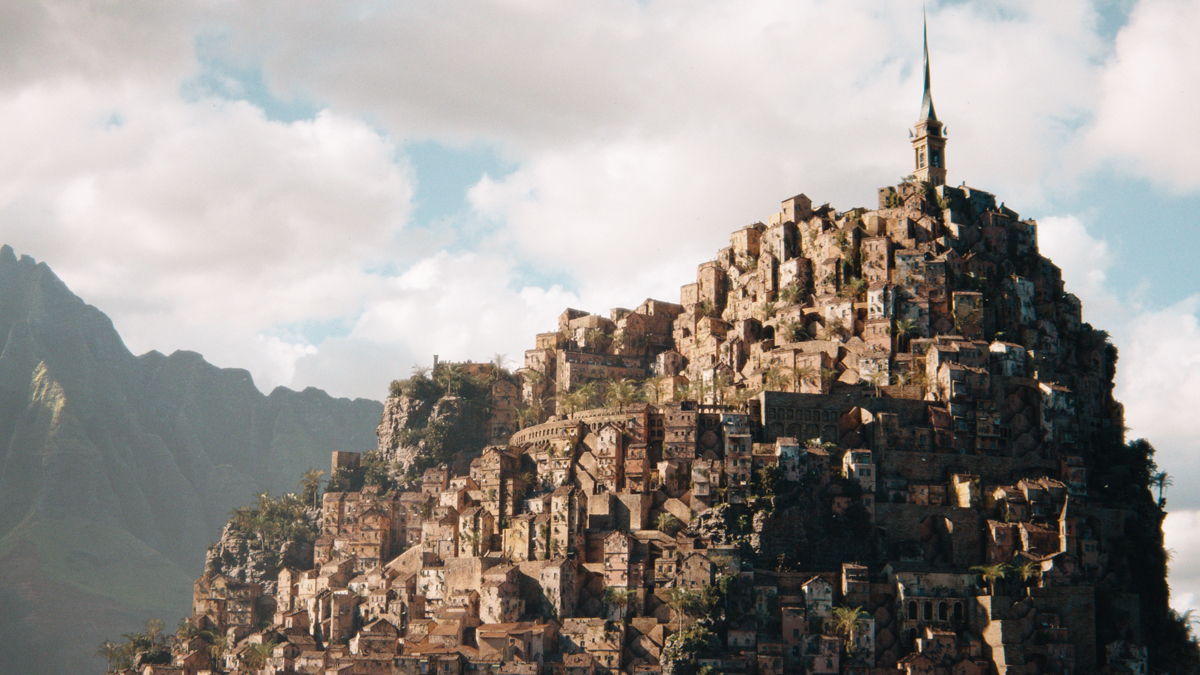
Cittàgazze, from Philip Pullman’s Dark Materials

Well, this was a mercantile city. A city of traders and bankers. We thought we knew about bonds. We thought a bond was something negotiable, something that could be bought and sold and exchanged and converted…But about these bonds, we were wrong. We undid them, and we let the Spectres in.

Giacomo Paradisi to Will Parry about Cittàgaze

The truth is out there but you might never find it

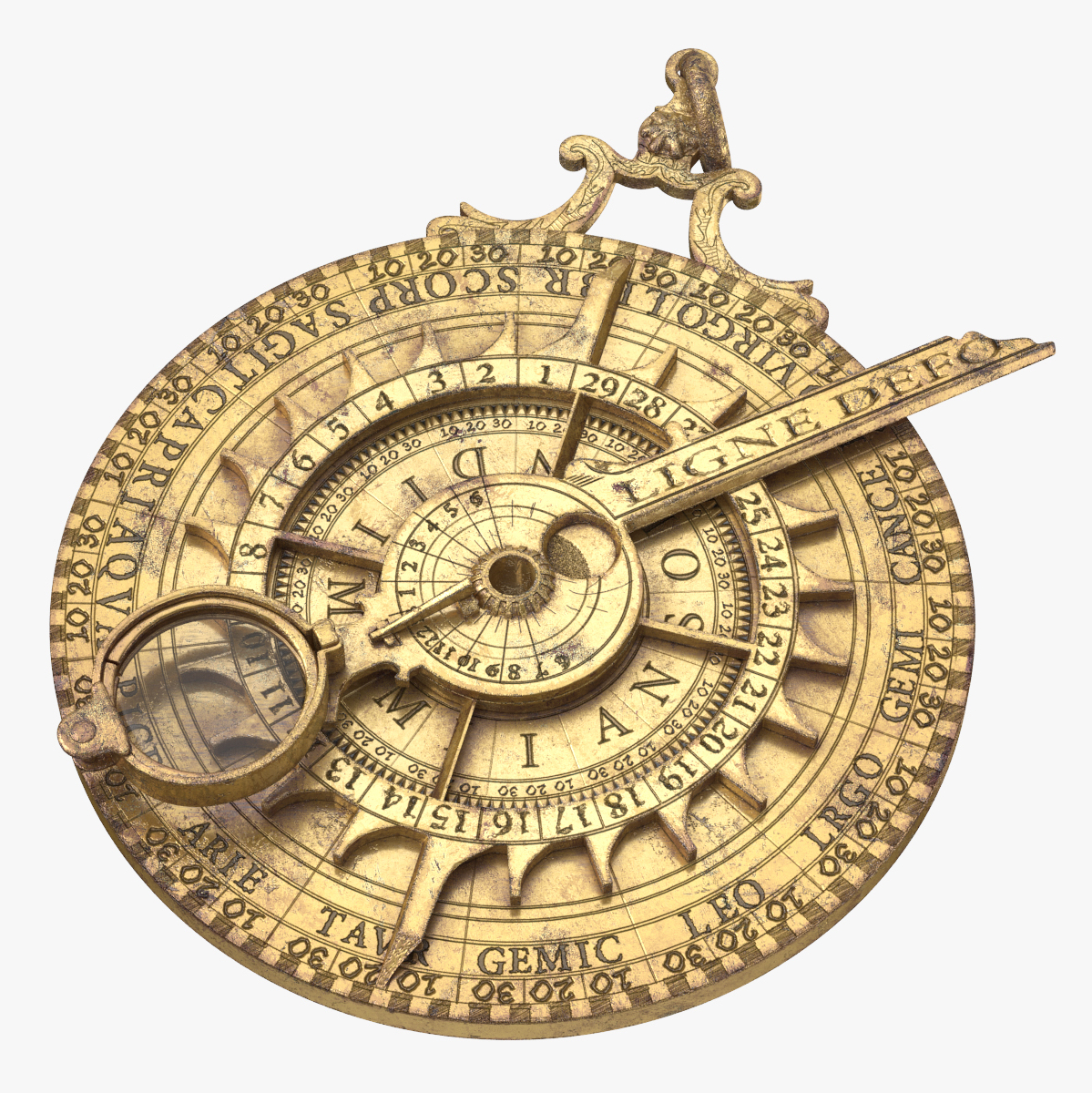
Melvyn Bragg recently gave a lecture at the Cheltenham Literature Festival about his intriguing new book Love Without End: A Story of Heloise and Abelard about the life of radical twelfth century scholars Héloïse and Peter Abelard. Afterwards, a member of the audience asked Bragg if he knew what had happened to their son Astrolabe. In response he stated that he did not, and he believed that it would take a trained historian who could speak multiple European languages around five years to acquire sufficient information from the archives, libraries and human minds of the world to piece together the life of Astrolabe.

In a world of ubiquitous global internet, Wikipedia, and totally unprecedented access to knowledge for the average person, it’s a somewhat sobering thought to realise that real Truth is still so hard to access.

Bragg is not suggesting that the life experiences of Astrolabe are unknowable, he is merely saying that such knowledge is hidden away in places that require vast amounts of time to discover.

In other words, the Truth is out there for those who are determined to seek it out, but the internet has not provided us with the panacea of Truth-discovery we sometimes think it has and it will take much more time and effort than most people are willing to dedicate in order to reveal real unmitigated Truth.

The Problem with Public Shaming

I saw this meme floating around on Twitter recently shortly after the Prime Minister lost yet another major vote in the House of Commons, this time on a hastily tabled timetabling motion for his Withdrawal Agreement Bill.

While I can, in principle, get behind the idea of shovelling industrial levels of excrement down the gullet of the leader of one of the most heartless and dangerous political parties of the 21st century, I also feel that publicly shaming a politician in such a way will ultimately do society no favours.

Anyone who bothers to study the lessons that history passes down to us will see that, in general, punishing people for perceived wrong-doing never produces a desirable outcome in the end, no matter if it’s a neighbour or the Prime Minster of a government you happen to despise.

If you think about it, I believe it’s pretty obvious that trying to publicly shame a professional politician like Boris Johnson won’t change their worldview, and is therefore unlikely to stop them carrying out the actions on which they have set their mind. More likely, it will simply lead to them becoming colder, more soulless, maybe more sociopathic, and over time, probably becoming more adept at performing sophistry and carrying out evil while absorbing like a sponge absolutely anything that is thrown at them.

In the insightful HBO TV series Succession, one of the main characters, Kendall Roy, undergoes a process of deep systematic humiliation over the course of two seasons. This humiliation is primarily inflicted by his own family, but acquaintances in the wider public also jump on the bandwagon where they have a clear opportunity.

The result is that by the middle of the second season, so much verbal and physical abuse has been fired at Kendall that he has become numb to its effect – being turned into a kind of emotional gimp where, no matter what humiliating words or emotional harm are inflicted upon him, they simply pass straight through, unable to have any noticeable effect, meanwhile creating an individual that is totally open to manipulation, and if you are in a position to wield power over them, able to do whatever you want them to.

This can create an incredibly dangerous individual that potentially poses a huge threat to democratic society. For, what is better for the multinational corporations who strive to create shareholder value by committing systematic violence on the worlds people and its commons than an agent who is completely impervious to all words thrown at them, who can convincingly lie without feeling any pang of conscience?

While the world undoubtedly needs much more love and empathy, I understand that it’s probably a stretch too far for some people to extend the hand of love towards someone who has helped inflict policies that have literally killed thousands of people over the last decade.

So what can we do in place of publicly shaming egregious politicians? Maybe its simply enough to work towards removing them from power and building more positive, progressive policy solutions to societies problems. Don’t fixate; create.

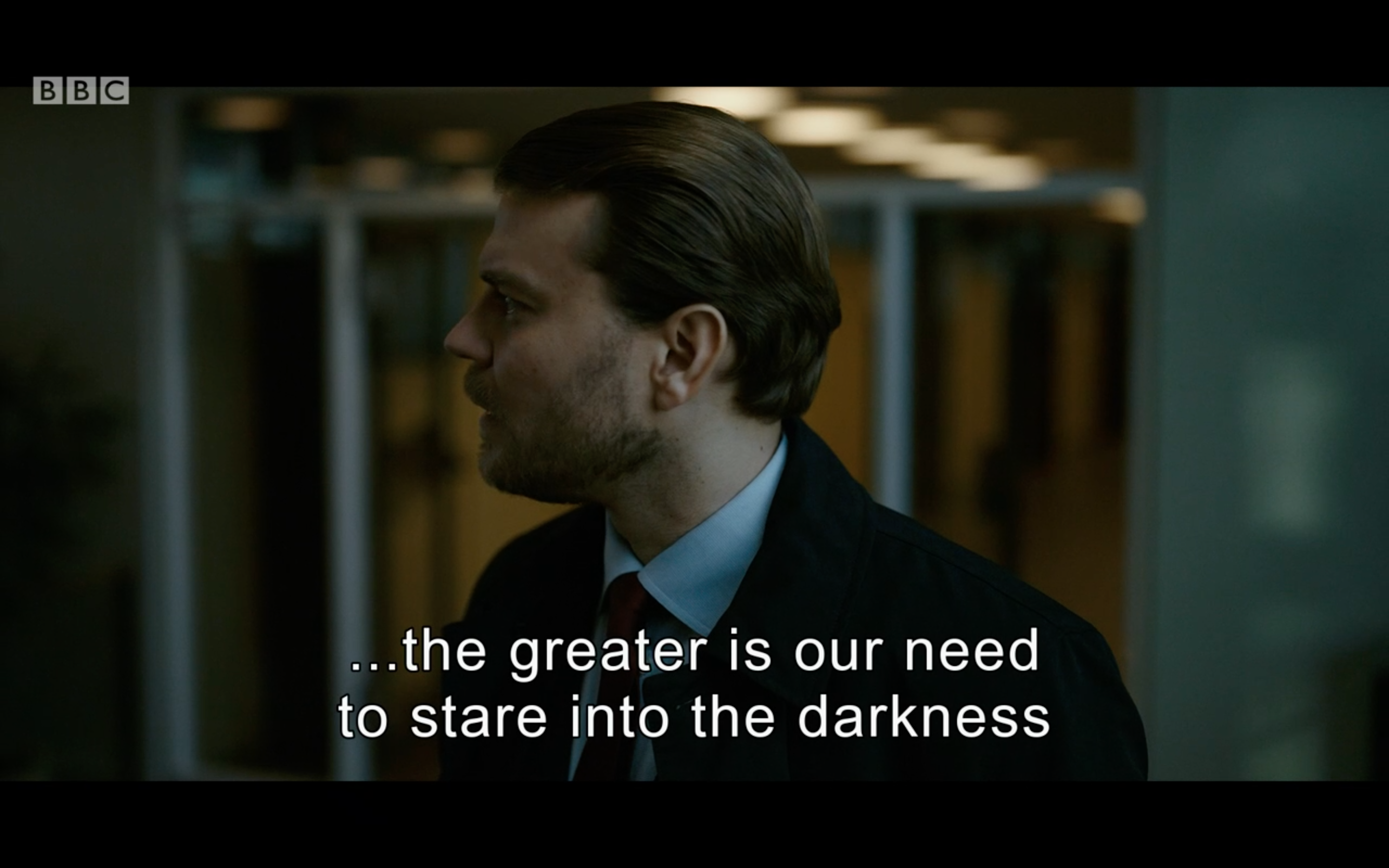
Over-Stimulation in the Distraction Machine

A Rumination on Adam McKay’s Vice

”Beware of the quiet man. For while others speak, he watches. And while others act, he plans. And when they finally rest……he strikes.” – Anon

It feels like the world is becoming more complex.

So what’s causing this new complexity?

Well, there do seem to be more ideas floating around today. Everyone’s mind is working overtime churning out opinions and thoughts, and with more people in the world now than at any time in history, it’s enticing to adopt the logic that all those new thoughts (in the form of Tweets, articles, books, interviews and conversations) are making society more complex. But maybe most of these ideas and opinions are simply recycled, reused and remixed from older ones? Indeed, originality is a hard concept to pin down, but it seems to me that little of what flows out of us today can be labelled truly original.

So what about technology? It does feel like all the new technology that we are inventing is producing more complexity in society, for sure. But crucially, I feel our technological inventions of the past century have led to a new and radically different way of seeing the world; one where the things in the natural world begin to look and feel like the technology we are inventing.

Once we begin interacting with computers more than people; everything in reality starts to feel like it is constructed of information.

One place where this worldview of seeing everything as information leads is the reduction of reality to numbers, binary ones and zeroes – every last single bit of it.

If we look at the word in this way, we begin to see how it might feel more complex; because information is a discrete material thing that is undoubtedly becoming exponentially more voluminous every single second of every day.


Sometimes I feel utterly overwhelmed by the experience (or information) that pours into my senses at what feels like a totally unprecedented rate.

This flow sometimes feels like a huge filthy sewer leading directly into my mind as I am drawn in by the hypnotic allure of television or my mental defences are overrun by huge, gleaming over-sexualised street advertisements.

More often though, it feels far more morally neutral; like a sparkling fountain or stream of information that just never stops flowing, albeit one who’s flow is constantly increasing, as if a mighty storm were raging further up the valley.

I think this means that, as conscious, rational, present beings living in the world today, as we are increasingly seeing reality as a flow of information; we are finding it harder and harder to put the pieces together and form narratives about what’s happening in the world around us.

Our minds constantly grasp at the tools of culture that have developed and grown over millennia to try and find ways to simplify the frighteningly enormous volume of information that flows our way.

We want nothing more than to talk to like-minded people, to friends, to neighbours, to mentors, about the films and books and places and news items we have jointly experienced so that our minds can anchor onto something solid, something unmoving, something constant. We reminisce about the days when we would all watch the same TV program and then share our thoughts about it the next day at work or school. Now we each have a near-infinite choice of programs waiting for us on Netflix when we finish work each night and the chances of us having watched the same one so that we can discuss it with our colleagues the next day is becoming increasingly thin.

Increasingly, people are ditching the broadcast news as well as newspapers. More and more people are getting their news from the near infinite feeds (and therefore infinite potential narratives) of social media.

For many, a weekly religious gathering that once allowed people to come together in each other’s company and hear the same story (however dubious you might feel about the content of that story), simply no longer exists in their lives at all.

The core narratives that we all agree upon so that we can move forward with a shared sense of purpose are vital and are beginning to be lost.


The gradual mechanisation and digitisation of more and more areas of our lives over the last couple of centuries has slowly led to our minds adopting a new way of seeing, one that increasingly reshapes our perception to match the machines, computers, robots and algorithms that we see in the world; a mechanistic way of seeing.

We often don’t even realise it but the way that we think about how things work, in society, our work, our homes, politics and business has become more and more systematised, more mechanical.

The way we explain to ourselves how things fit together and interact with each other was once organic, messy, a bit chaotic, which left open the possibility of radical change. Now we explain things through machine-like analogies because machines are penetrating our cultural sub-strata to a level that is not only unprecedented but is also increasing at an exponential rate.

Soon almost everything we have created will be controlled by some sort of mechanical or digital mechanism, from all of the tools we use to communicate to the vehicles we use to travel around. The methods we use to pay for every single thing we buy; the ways we produce, store, prepare and cook all of our food; the medical care we provide will all soon either become completely automated or at least attached to or controlled by a machine or computer of some kind.

As a consequence, we increasingly think of cause and effect solely in the reductionist terms of machine thinking. Democracy works like a machine: grinding on under its own steam, churning out decisions and legislation, even though it is totally in the hands of people, in their diversity, richness and infinite beauty.
Our distribution and logistical systems – how we move and distribute all of the things we need to survive – are seen as well oiled machines, efficient and increasingly automated.
Each and every business is now seen as a giant machine that must at all costs be driven forward by the sole motive of efficiency, fooling ourselves into thinking we are taking its control out of the hands of people with all of their complexities, nuances, messiness and unreliability.

We now increasingly even think of our brains simply as super-complex computers, calculating their energy use and calculation rate as if they were manufactured in Silicon Valley.


In the midst of all the confusion arising all around the world as a result of the perceived increase in complexity, some people in positions of power have chosen to take advantage of this confusion as well as the new way in which we see the world and use mechanised and highly-automated tools of distraction to keep our attention firmly centred on shiny, attractive and hypnotising things that can be placed in front of our face to keep us under control while in the background they dismantle the structures of civilisation in order to attain insatiable amounts of power and wealth.

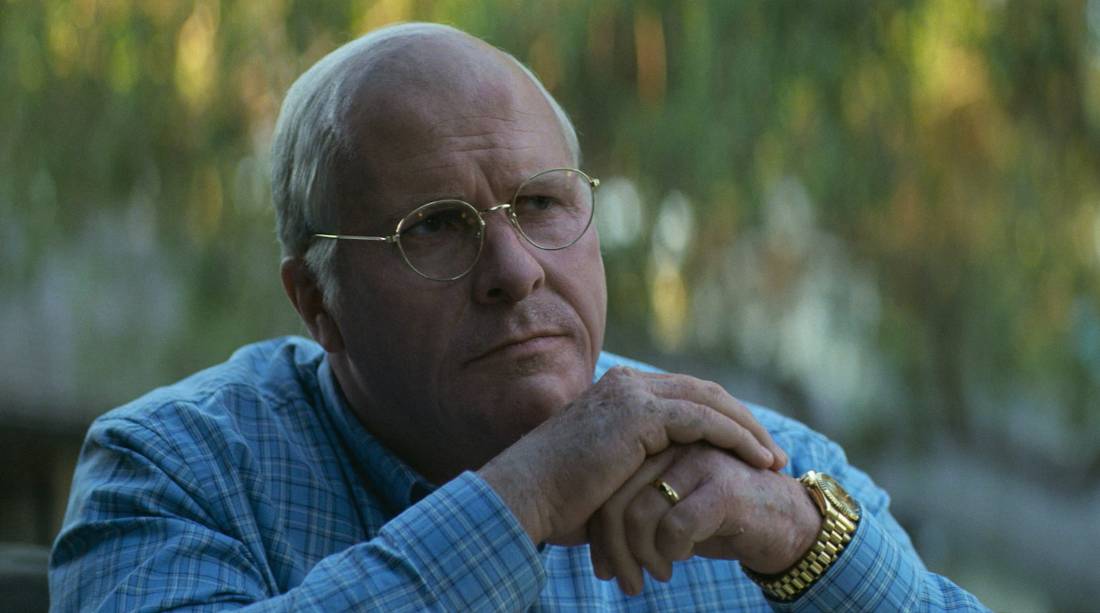
Vice, the latest film by Adam McKay, details how Dick Cheney is undoubtedly one of these people and probably one of the most successful in recent history at pulling off this trick. While Vice-President of the USA between 2001 and 2009, he applied what he had learnt earlier from masters of deception and distraction such as Henry Kissinger in ways that are eerily similar to the actions of the master Russian trickster Vladislav Surkov. He unleashed untold physical and mental destruction on the world, funneled trillions of dollars into the pockets of his friends, acquaintances and fellow travellers, entirely abandoning his duty to confront the catastrophic contemporary problems of human civilisation such as climate change by wielding almost unlimited amounts of executive power.

In order to get away with all of this in the middle of an apparently democratic state with a free press, multi-branch government structure and highly literate citizenry, the film demonstrates how Cheney applied the skills that he had learnt from fly-fishing to make people look exactly where he wanted them to; directly away from his shady shenanigans.

He, like many fishermen before him, knew that if you distract the fish with the right lure, you can make them do absolutely anything. If you construct the lure out of the right material, you can burrow right down into the fish’s natural instinct and trick it into surrendering itself completely; thereby giving itself entirely over to the whims of the fisherman.

This works for humans just the same as it does for fish, you just need to construct your lure out of television, Netflix, video games, shopping centres, alcohol, drugs, food, or sex instead of maggots and feathers.

In other words, vices are not just myriad harmful traps that we as individuals can accidentally fall into, but are also lures that people with power and no morals craftily encourage, promote and facilitate in order to keep us distracted and prevent us from reaching our full potential while they steal and hoard the world’s resources for themselves.


The deliberate destruction of the structures of civilisation by Governments and shady hangers-on in recent years has helped to enable the reemergence of a dark side of the human psyche that many, maybe somewhat naively, had forgotten still remained alive and kicking; fascism.

Except the fascism that we now see all around the world creeping once more out of the deep, dark burrow that many thought it had been consigned is different to the strain that we have seen before.

This time, to dovetail into the culture of our era, it has evolved to leach off a technological host.

Increasingly, people worship material technology while promoting their misguided belief that everything in the universe is simply made from cold, hard atoms.

Technology is the messiah. Numbers are king. Science is God. All Hail! And down with anyone who believes in any wishy-washy social woo-woo nonsense like Art or the study of the ‘humanities’. Everything must be measured and anything that can’t be measured either does not exist or doesn’t matter. The logical endpoint of this ideology is painfully obvious; total nihilism.

When we believe the only thing that exists is the material, any space for something greater, more mysterious or even different evaporates. What then grows in those mental furrows is something very dark indeed.

In today’s world, that darkness is growing.


The problem for men like Dick “heartless” Cheney, the place where their clever little plan comes unstuck, is that the accumulation of power and wealth do not – and ultimately will never – go unnoticed.

Part of the reason for this is that you can’t erase knowledge. If you do something evil, the overwhelming likelihood is that somebody somewhere will have seen you do it and therefore that person has ‘knowledge’ of your evildoing. Now that knowledge, once in existence, is sticky, it hangs around and is almost impossible to erase if you are the evildoer. Sure, knowledge can be forgotten, but that usually takes generations and rarely happens to truly important knowledge. The only other real way to erase knowledge if you are an evildoer is to kill all of those with the knowledge but obviously this then creates yet more knowledge of evildoing and so on ad infinitum.

These men try to hide their loot and attempt to draw a curtain around their power-play but these actions always have wildly unpredictable and chaotic consequences that literally nobody, not even the most powerful supercomputers with their most advanced models, can predict. What this increasing chaos looks like to the outsider is an exponential increase on the ‘crazy-scale’; they can’t figure out why person X is committing actions Y and Z but they sense intuitively that these actions just don’t make sense in a sane, rational world.

Just take a look around you at the kind of things that have been happening over the last few years, the bizarre, ever-more-extreme craziness that is piling up day-by-day. The world, which once felt understandable and within our grasp, today seems increasingly weird and unexplainable.

In this milieu, many develop conspiracy theories in an attempt explain the craziness that they see around them.

The techno-fascists attempt to explain the craziness in the only way that they can (if all you have is a hammer, every problem looks like a nail); using a technological metaphor. They nonchalantly assert that we live inside a simulation controlled by some higher martian cyberlord.

Humans are and always will be exceptionally curious problem-solvers, and therefore our natural reaction to the confusion caused by an elevation of the ‘crazy-scale’ is to double down and try even harder to put the puzzle pieces back together-to try and understand what on earth is going on.

This means that for the lords of darkness to remain hidden behind the curtain, the power of the distraction machine must increase.

However an increase in sensory stimulation for the purposes of distraction can only lead to one inevitable outcome: over-stimulation. People simply can’t take any more. Sure, they’re distracted from the reality of what’s happening around them, but there’s only so much vice we can take. Eventually we will get bored of Netflix, the drugs we take will stop having the effect they once did, the bad food we eat will lose its taste and ability to satisfy us, the things we buy to make us happy will stop doing so, we will begin to crave more than base carnal pleasure.

Our minds and bodies are clever, more than it’s ever possible to know, and will eventually realise that something is not quite right, that things are out of balance and, setting out on the path to re-correct the balance, they will learn to become aware again. Then it’s only a matter of time before the energy currently consumed by vice is once again available to start putting the puzzle pieces back together again.


We do not live inside a machine or a simulation and the natural state of (wo)man is not to seek power or wealth or pleasure, or even happiness; it is to be present and open to the Truth of experience, to learn, grow and day-by-day slowly become a better, more conscious person.
Stay Strong – Change is Coming

See, there are a few things to remember about the latest and greatest omnishambles-of-doom story/event/problem/crisis that barges its way to the top of the news cycle, onto the tabloid front pages and out of the mouths of bored employees around metaphorical watercoolers – a couple of weeks ago, for a handful of days, it happened to be the seizing of British state power by jester-in-chief Boris Johnson under the desperate guise of a democratic election but next week, and next month it will be something else entirely. Things happen fast these days and it’s easy to become overwhelmed by the constant barrage of crises that pummel us with near-timetabled frequency.

The important things to remember about these narrative-shaping events are;

  1. Things can always get worse in the short term- and they probably will. No matter how tragic, terrifying or disastrous something appears to be right now, the situation can ALWAYS get worse. So it’s important to prepare ourselves mentally for a level of horror that will be greater and more intense than what we are currently experiencing – pessimism of the intellect, optimism of the will and all that.
  2. It’s very unlikely that you will be able to affect things that are happening on a global or even national level, therefore it’s a wise idea trying not to spend too much time worrying about them. It’s overwhelmingly unlikely that you’re a minister-of-state, an international diplomat, a multinational CEO, an MI6 agent or a billionaire. Therefore the amount of agency you can have at a national or international level is approaching zero. So instead, concentrate on your local vicinity, the area in which you call home. Here you can actually have an impact with your actions.Once you put one foot in front of the other, it might surprise you how much you can achieve.
  3. “And so long as men die, liberty will never perish….”. This quote, part of an incredible and timeless speech by Charlie Chaplin in the film The Great Dictator, reminds us that however bad things get, change is always guaranteed. Everything is constantly changing around us every second of every day and that includes the individuals who hold the reins of power. The rogues who sit on thrones (both physical and metaphorical), who commit genocide and murder, who bully, torment, torture and hate, will one day either die or be forced from their position. You may have to wait decades for that day, it might arrive tomorrow, but always remember; that day will definitely arrive.
  4. The long arc of history is undoubtedly directed toward the light. People become wiser, freedom becomes more widespread, a sense of justice becomes more tactile. Dark times may arise, the light may become obscured, but there is absolutely no doubt that, in the long run, the light grows brighter.

Peace

Upwards – A Week In France

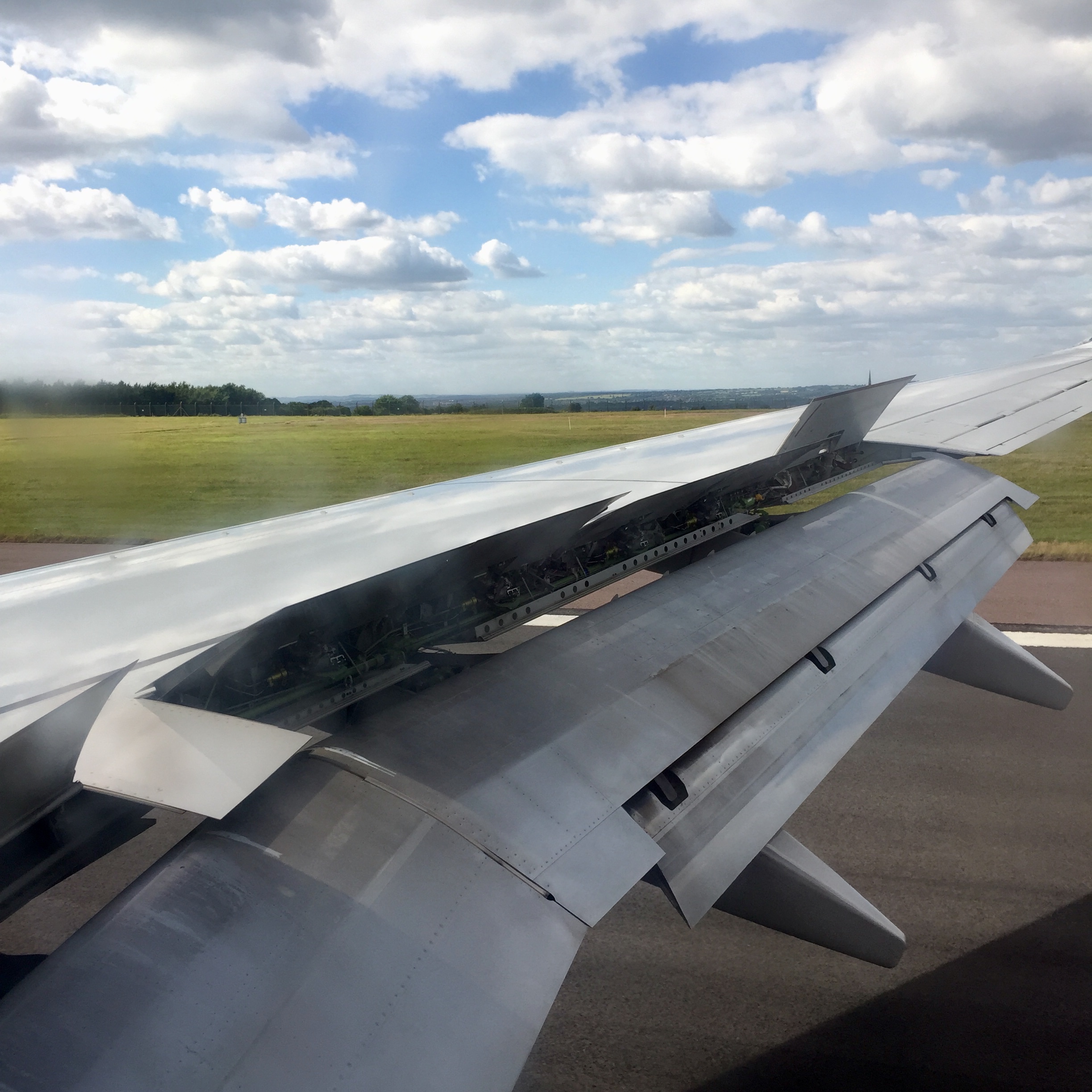
In those few seconds at the end of the runway when the pilot pushes forward on the throttle levers and the engines quickly change from idle to something approaching full thrust, the feeling can be incredibly thrilling if you let your soul off the leash a little instead of distracting it with a book, a sweet or a little conversation.

When I’m far away from any planes or airports, I occasionally wonder whether those few seconds are the closest a person can comfortably get to death without actually dying. That strange sensation of putting your body through a dangerous situation that it’s not really meant to be subject to can do peculiar things to you. So much could go wrong when you’re on a plane, resulting in utter catastrophe, even though the probabilistic likelihood of anything actually going wrong is overwhelmingly slim.

In many ways this is a silly line of enquiry. Is flying any closer to death than standing on the edge of a cliff, driving a car down the motorway or even chopping onions? Probably not. But I imagine those few seconds at the end of the runway can still make you feel some horrendous things if you happen to have a propensity to be scared of flying.

Thankfully I’ve never been afraid of flying. That’s not to say I’ve never had some wild thoughts in those few pre-take-off seconds though. In the past, while letting my mind wander a little, thoughts of death have indeed raced towards me like a roman chariot as the pilot completes his final checklist.

So I was curious about how I would feel when flying for a trip to France recently, as this would be my first time on a plane since I started practicing meditation. Having seen my anxiety generally reduce in all aspects of life and my mind begin to quieten thanks to a daily meditation routine; the scientist within me was excited to see how my experience of travelling at 500mph in an aluminium tube would change with a slightly quieter and generally less-anxious mind.

I found that the answer was pretty much what I had anticipated; there were absolutely no irrational thoughts, no uncomfortable visions about death or crashing, I was left with a thrilling excitement underlying the experience, a joy at rising to greater heights on a pair of wings, through the clouds and up like an angel into the stratosphere.

The majesty of rising up to thirty-odd thousand feet, seemingly floating on nothingness is quite something. It feels like we’re not supposed to be there, like we’re breaking some unwritten law of nature, a transgression that will eventually have to be repaid in some Promethean enactment of justice.

Flying is crazy and beautiful at the exact same time; a bit like most things when you think about it.


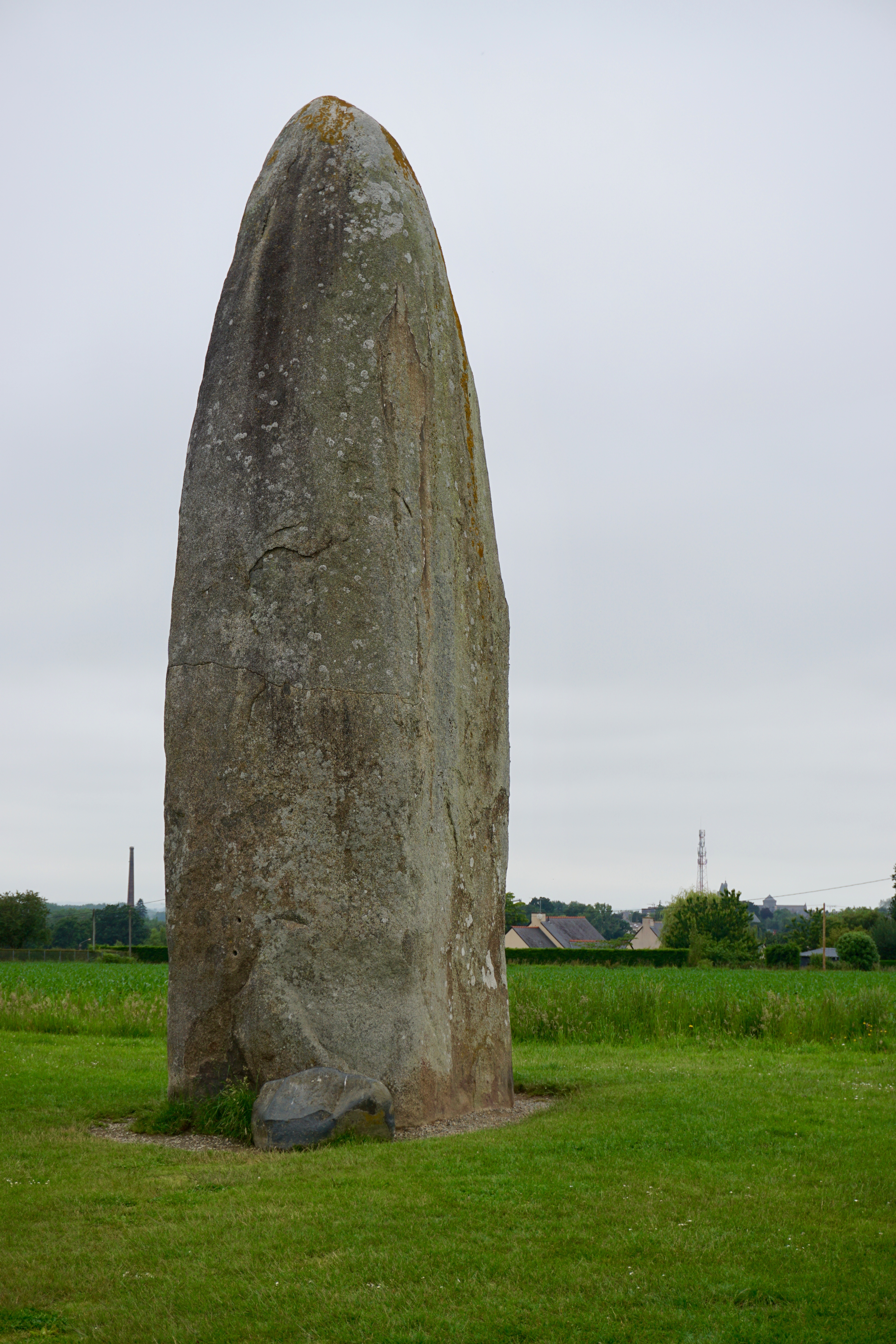
France is full of mysterious wonders, passed down as gifts to us from those who lived in an earlier time. One such wonder lies near to Dol-de-Bretagne, in the Brittany countryside.

On the very edge of the town, in the middle of a farmer’s field, is a 120 tonne slab of granite over nine metres long that has, at some point, been dragged for miles to the top of a hill and raised so that it is rising up out of the ground at ninety degrees. We don’t really know who did it or why they went to such effort but our best archaeologists estimate it was erected in the neolithic period, probably around the same time as Stonehenge, around five thousand years ago.

The stone has been smoothly rounded at the end so that it points upwards towards the heavens, much like the steeple of a church. Although knowledge of its practical use has long since dissipated, the stone still stands firm after millennia as a beautifully subtle reminder that we should keep our eyes directed upwards, towards the sky, instead of downwards to our feet.

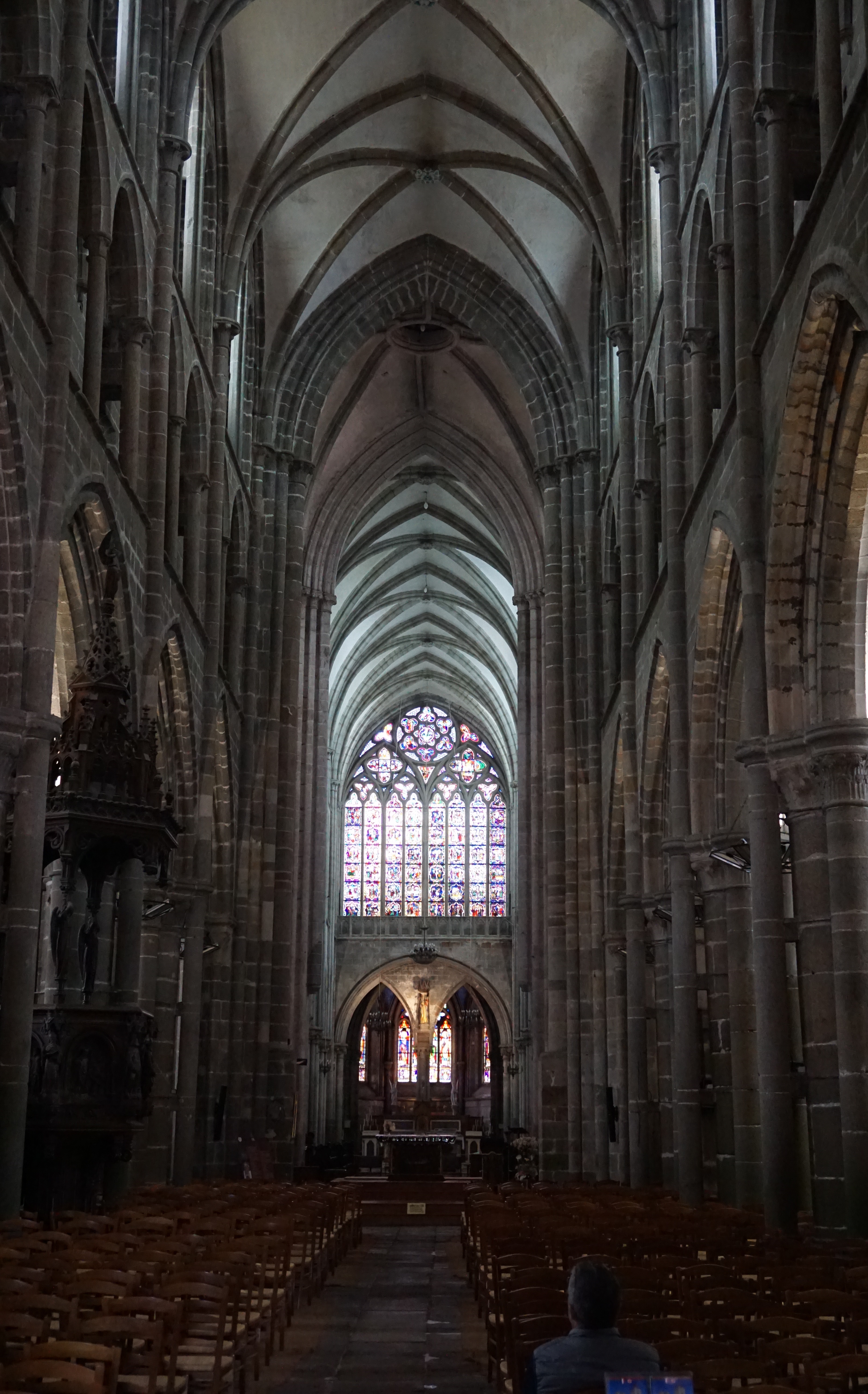
A few miles away in the very centre of Dol-de-Bretagne lies a cathedral. Unusually large for a Breton town so small, the cathedral was constructed in the 13th century.

Due to various bouts of destruction in the centuries since, it’s a bit of a hodgepodge of different architectural styles, but inside, as you walk through the front doors, you are confronted with a long narrow church that is overwhelmingly Gothic: it’s narrow nave rising high above your head, in a way that makes you feel as though your soul is being squeezed upwards into the heavens. It’s a peculiar feeling, but once you notice it, it becomes undeniable; as if an unconscious, ever-present force is willing you to rise up towards the sky.

The great Gothic cathedrals of Europe are undoubtedly one of the high points of human civilisation. Thankfully we are still graced with the existence of most of them, almost a millennium after their construction, for they truly are wondrous in every sense.


Dol-de-Bretagne is about four miles from the beautiful Brittany coast, lush in its tranquil coves and seaside towns surrounded by relatively untouched countryside, it’s not too dissimilar to that of Cornwall.

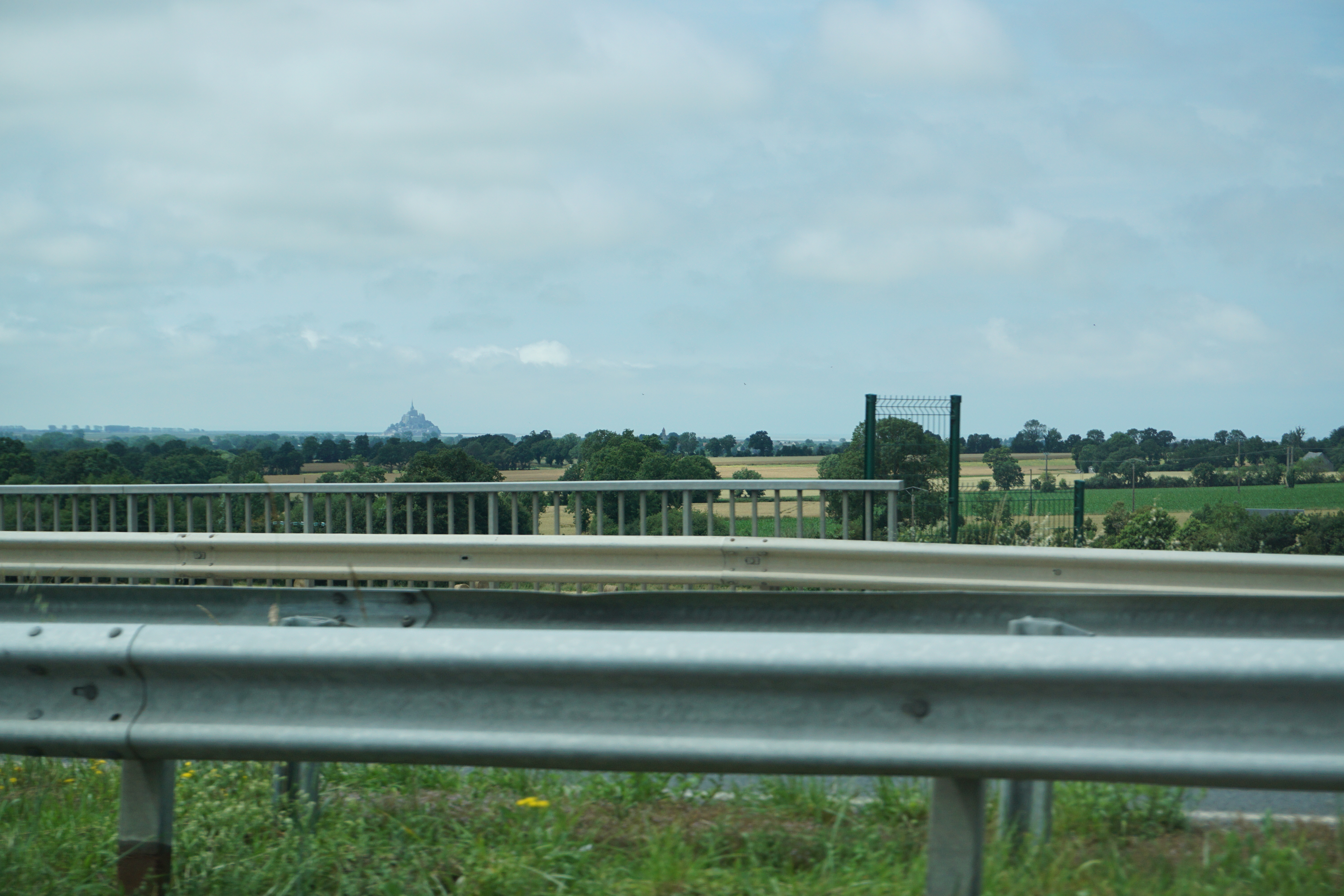
Driving away from the town, parallel to the coast, you can see the mighty wonder of Mont-Saint-Michel, steadfast and rising up out of nothing to emerge standing tall on a flat horizon.

A beautiful Norman abbey close to a thousand years old sits at the summit of Mont-Saint-Michel, a small rocky outcrop in the middle of a huge flat tidal bay. There is evidence to suggest the history of Mont-Saint-Michel stretches back at least two thousand years, with many interweaving layers of architecture and culture built up over the centuries. Some even say the island was once attached to the mainland and surrounded by a dense forest as recently as 1,500 years ago.

Due to the flat and desolate nature of the bay, the crowning abbey and its sharp spire can be seen from all directions upto twenty miles away; a majestic beacon forever pointing towards the sky.

The first time you see it, Mont-Saint-Michel has an amazing effect on you, there are few things in the world quite as distinctive. But it doesn’t lose its magic as the years roll by and you see it again and again, especially when viewed from the motorway when it’s raw wonder can be seen contrasted with the urban mundanity of twenty-first century life.


When driving around Northern France, the change of the landscape, as you move from Brittany into Normandy, is quite distinctive. The lanes of Normandy have a distinctive look due to something called bocage; the hedgerows either side of many country lanes rise high upon steep banks either side of the road, making it difficult to see into the fields beyond.

This unusual topographical feature made it notoriously difficult for Allied troops and armour during the Battle of Normandy towards the end of WWII, allowing the defending German forces to ambush the advancing armies with ease.

Today however, as I travel down the winding lanes of Normandy, overt traces of the fighting that took place in those same lanes three quarters of a century earlier have almost completely disappeared. Instead, the steep bocage banks lining so many lanes encourage you to look up towards the sky as your sight-lines across the neighbouring fields have been obscured. This experience is akin to that inside of a gothic cathedral; that feeling of your soul being squeezed upwards, willed to new heights by the natural cathedral of steep earthy bocage.


Halfway into my time in France, I sat reading Marcus Aurelius’ Meditations, its timeless wisdom travelling down the millennia to blow my mind in the year 2019.

There are many things that are incredible about the book, not least of all its provenance which can be traced back to its careful preservation by a single man, Arethas of Caesarea, a Greek bishop in the 10th century who liked to collect manuscripts. He described his copy of Meditations as “so old indeed that it is altogether falling to pieces” and it’s only thanks to the dedication of that one careful soul that we can today read Marcus Aurelius’ literary and philosophic masterpiece.

But as I sat there in the Normandy sunshine leafing through the pages with the transcendent Move On Up by Curtis Mayfield gently playing in the background, I was suddenly struck by the books gentleness; the way that Aurelius wanted to communicate all of the beautiful, useful, subtle, ever-so-positive wisdom that he had accrued and filtered and distilled and shaped during the years that he was emperor of the largest empire to ever rule the world.

Apparently, Meditations is more of a personal diary than a book, Aurelius writing to aid his own personal development and never intending anybody else to read it. We’ll never know his true intentions, but to me, the book’s ninety pages are so incredibly well formed and calmly authoritative that it’s hard to imagine them not being written with other readers in mind.

Almost every sentence within the book’s pages is written, not on a journalistic whim or a stream-of consciousness burst but in a well-thought-through and meticulously edited collection of concise wisdom that gently reminds the reader how to go about transcending their current state and become a better, braver, more virtuous, more conscientious, more tolerant person.


The beaches along the western coast of Normandy between Avranches and Granville are surprisingly beautiful. They don’t have the quaint cosyness that the best Cornish beaches possess, mainly due to their vast length, but the sand is fine and golden, and they rarely get super busy.

After spending an excruciatingly hot few hours at a beach near the little village of Carolles, the drive back across the coastal hilltops provided a stunning view across the bay, and right in the middle of that vast tidal bay was the mighty Mont-Saint-Michel imposing itself yet again. Sometimes it feels as though it haunts my experiences like an immovable spectre, reminding us of our timeless connection to those who came before.

I recently read how, in early August 1944, Ernest Hemingway dragged most of the US press corps who were in Normandy reporting on the invasion of Europe (including Robert Capa and Charles Collingwood) to Mont-Saint-Michel for a huge party lasting days, drinking copious amounts of vintage wine given to them by the proprietors of the famous Hôtel de la Mère Poularde after being kept hidden from the occupying Germans for years in a secret cellar.

Ernest Hemingway, Robert Capa and Charles Collingwood along with all of their memories, experiences and stories are now long gone from this Earth, but Mont-Saint-Michel remains; standing firm against the relentless barrage of waves that ever-so-slowly wear away its rocky surface.


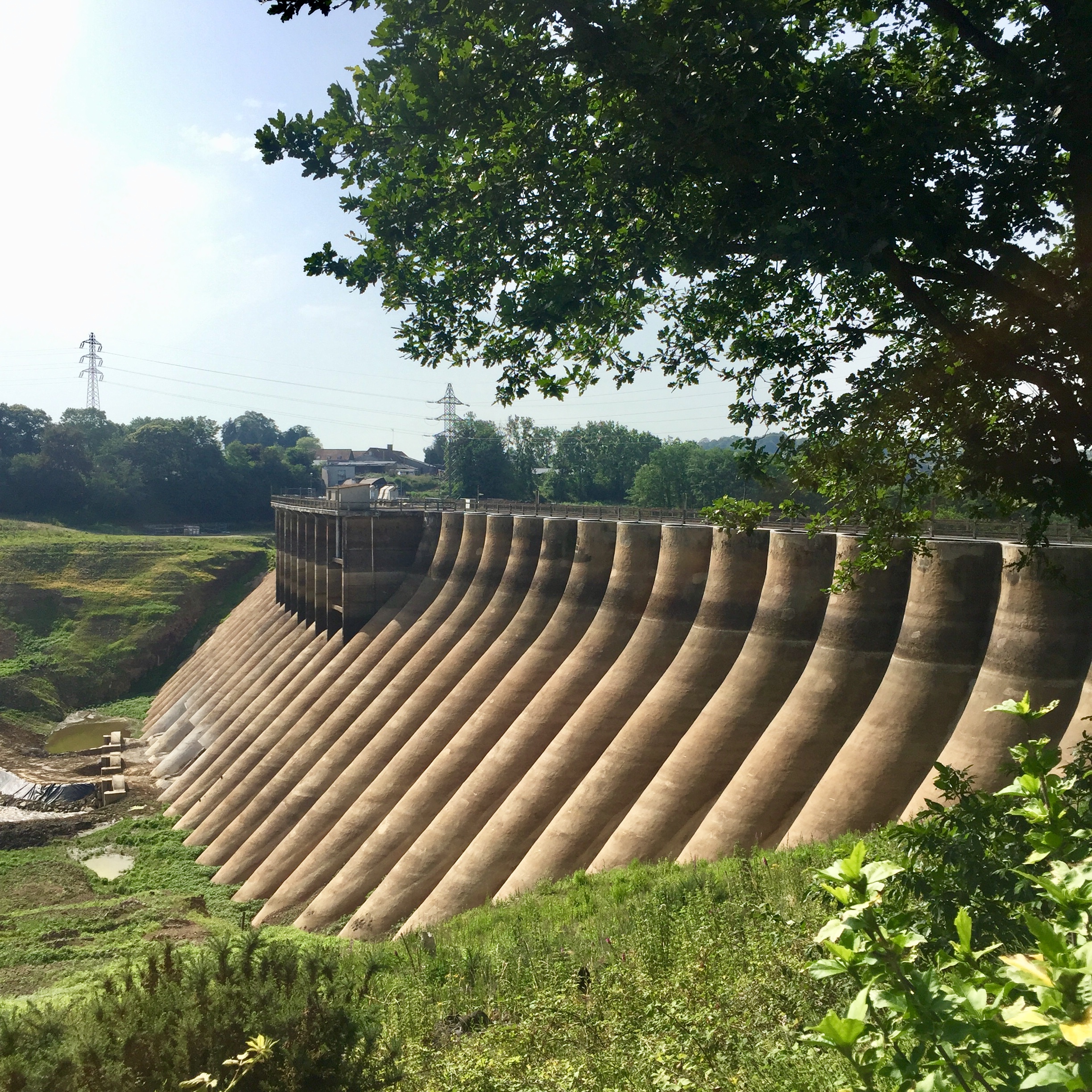
On another day, a journey through the Normandy countryside bought me to an old dam, built in 1932 to generate hydroelectricity.

It once held back the Selúne river to create a huge new lake, but now, with the dam’s sluice gates permanently open and the lake completely gone, it’s in the process of being demolished.

There is no doubt that dams are true marvels of engineering. It’s no less of an incredible feat that a beaver is able to build a structure out of wood that can hold back the force of a raging torrent than it is that our species figured out how to hold back the Colorado and the Yangtze. They say that so much concrete was used in the construction of the worlds largest dams, they will be one of the last large vestiges of human civilisation remaining after our species has long faded into extinction.

But ultimately, how wise is it to hold back the forces of nature?

A dam can generate energy, it can protect us from danger, but preventing natural forces from flowing is bound to eventually lead to major problems elsewhere.

The dismantling of the dam on the Selúne in Normandy has resulted in years of protests from locals who had grown accustomed to the way things have been for the last few decades, drawing a sense of safety and comfort from the holding back of nature.

But maybe sometimes, it’s better to just let things flow instead.


As my time in France reached an end, I was left thinking about Marcus Aurelius and his gentle message of transcendence. Like the Gothic cathedrals and so many of the things I saw while I was in France; rise up, he wills us. Because we all have the opportunity, if we choose to grasp it, to transcend and be better than we were yesterday.

It’s been a while…

However vast the darkness, we must supply our own light.” – Stanley Kubrick

The last time I posted on this blog was over five years ago.

So to start posting again now, after all those years, begs the question; why?
Am I writing for a specific reason, with a specific motivation or goal in mind? Well the simple answer is no; I’m not writing for any particular reason. In fact, I’m not writing because of reason at all. Reason has come to dominate the culture in which we live to an extraordinary degree and what increasingly gets me excited is unreason, emotion, creativity, spontaneity, the moment.

Over the years, I have been lucky enough to stumble upon or be guided towards the work of many enlightened people. Their work has provided me with solace, it has made me happy, it has filled me with joy. It has helped me.
Today I write and create for pleasure, and because I’ve tried not flexing my creative muscles and it makes me feel much worse. To put it more bluntly; I am yet to find another effective coping mechanism for living in the Anthropocene.

Maybe one day, my work can help someone else the way that others have helped me and I can pay back the gift I’ve received in order to complete the circle.


Although I haven’t posted anything on here for a few years, that’s about to change. As my attempts to see into the future have not yet succeeded, I can’t tell you whether these posts will continue with regularity, but what I can tell you is that it’s certainly my intention to try and write substantially, to the best of my ability, and with frequency going forward.

One of the reasons I have posted so little of my work on the internet over the last few years is that I’ve been suffering from somewhat of a crisis of confidence. I often start writing and then quickly become plagued by the question of what I’m actually trying to achieve; who exactly I’m writing for.

The speed and abundance of information in todays world mean that it’s easy to find people already writing about almost anything you can think of somewhere on the internet.
This can be a big confidence killer because as soon as you think of something interesting that you believe is worth expressing, it’s almost guaranteed that you’ll find someone who has already written about it, and from there it’s even easier for your mind to be lured into the trap of believing that because someone has written about it, everybody already knows about it.

In actual fact, every single person in the world has a different level of knowledge and therefore there’s someone out there who might benefit from pretty much any idea you can think of. I think what’s important is context, intention, and the WAY it’s expressed.

The film critic Manuela Lazic said on a podcast recently that for her, writing is about forming ideas about things. It’s the actual process of sitting down to write that enables those ideas to materialise out of the void and without that process there would be nothing to express in the first place. It’s easy to get caught up in the idea that when we write, we are simply communicating pre-existing thoughts and ideas but Lazic is right; I don’t think that’s how it works.

I think writing is integral to distilling loose thoughts and ideas down into their material essence which probably goes a long way to explaining why I often feel so compelled to write.


It was always my aim with this blog to attempt to communicate some of the things I have learnt and experienced to those who might be interested and in todays complex society, I feel there is a greater need for clear communication of experience than ever before.

But that’s not my only aim. Another reason I want to start sending my writing into the world again is to get some practice, with a view, over time, to improving my ability to express myself using the beautiful medium of words.
Writing was never my first love; I despised being forced to craft essays and objectively analyse the subjective art of poetry as a teenager at school, but over the years it has slowly wrapped its tendrils around me and the more I read, the more I fall in love with the ability of the wordsmith to express the deepest and most profound insights.

I’ve been writing into the void for a few years now, not sharing anything I create. In that time I’ve managed to amass over 125,000 words about a huge range of subjects and forming the beginning of countless potentially exciting creative projects. And I think to a certain extent that’s fine; as I mentioned above I primarily write for myself because it makes me feel better.

But I feel there comes a time in your life when you have to make that jump from writing for yourself, to writing for other people.

There are obviously basic pragmatic reasons for this like achieving feedback in order to improve as a writer, but on a higher level, I sense it’s more about paying back the gift of knowledge, experience and education that those who have gone before us have so selflessly shared.

Of course , if you’re not into it and find what I write dull and vacuous then please don’t hang around. Life’s too short to be bored and miserable. Go live your life like a cowboy on the badlands with a world of open plains and radical possibility in front of you.


So what might be appearing on here in the near future?

I’ve got a lot of exciting projects on the go at the moment, some of which will hopefully see the light of day in the coming weeks and months, but I plan to use this blog as a place to post more experimental stuff and informal articles. I also want to use a lot of my own photographs and chuck in some videos and music as well to make it a bit less text-heavy.

If you want to follow me for updates on stuff I do in the future, Twitter is your best bet for now, but in the longer term, I’m planning to make my website the hub of my creative endeavours so keep your eye on that too.

Manifesto

Hi and welcome to my new blog: The Good, The Bad And The Subjective.

My motivation and aims are laid out in the manifesto below. Enjoy!

The Good, The Bad and The Subjective is a journey into the mind of a wannabe polymath who believes Art and Science are two different but equally essential ways of chasing the ever-receding boundaries of truth.

The Ancient Greeks described two equally important ways of looking at the world; Mythos and Logos. These can be roughly translated to a mythical way of thinking and a logical way of thinking. Mythos is a worldview promoted by artists, poets, musicians and other mythical thinkers who value abstract and subjective thought and who search for answers based on experience and feeling. Logos on the other hand is favoured by scientists who see the world more empirically and view truth as being objective and universal.

The greatest results are achieved in civilisation when these two ways of thinking are bought together in equal measure. For example, logos has allowed us to discover amazing new ways to cure disease and lengthen the human lifespan but it’s only through mythos that we have learnt to value human life enough to bother discovering these medical advances.

Over the centuries, the duality of mythos and logos has been visualised in lots of different ways such as Left Brain vs Right BrainSpirituality vs Rationality and Art vs Science.

I believe that a lot of the Humanity’s problems both now and throughout history have developed through an imbalance of Mythos and Logos in the culture of a society. In my opinion, a perfect balance of the two should always be sought, however hard this may be in reality.

Therefore, although this blog is ultimately just somewhere to share the ideas that inspire me on my road to enlightenment, I also aim to promote mythical and logical ideas in equal measure in order to give the collective human consciousness a helping hand on the road to perfect balance and harmony.

In my meanderings I expect to cover; art, design, architecture, science, technology, philosophy, history, psychology, sociology, ecology, anthropology and anything else that inspires me.

One thing I want to try and avoid on this blog is negativity as I believe the society of today is in need of as much positive energy as it can get. Partly for this reason, but mainly due to the fact that I have ideas for another blog on these subjects, I also plan to avoid current affairs, politics and political philosophy.