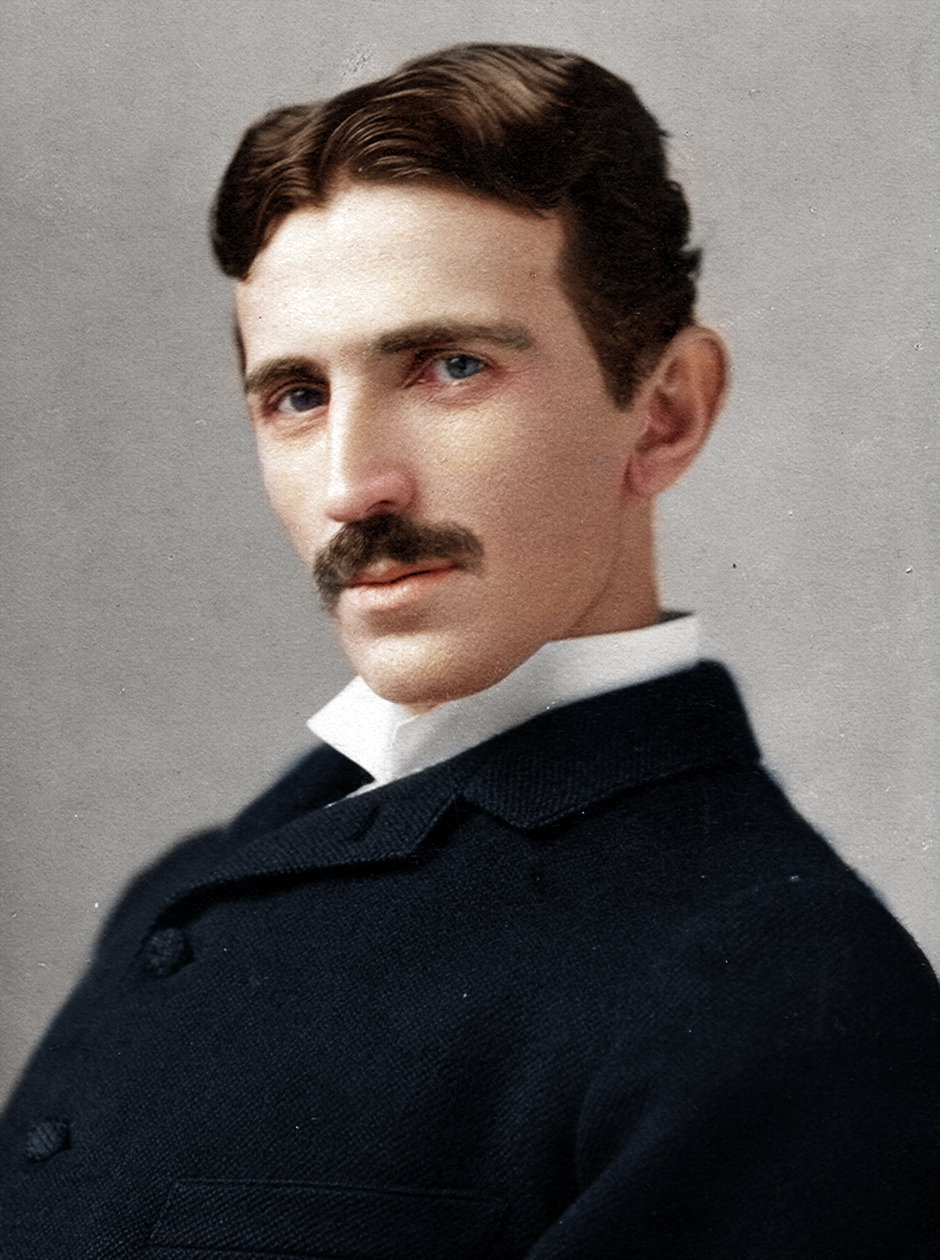
This is the first post in a new series which I was originally going to call Why …………… was a Genius. I decided against this due to the fact that the term “genius” is highly subjective and should probably be reserved for a higher calibre of person than some of the ones I plan to highlight in the series. Instead, I chose “The Good Guys”. These are individuals who have achieved great things and in my opinion, for whatever reason, have not received the full recognition they deserve. FIrst up, Nikola Tesla.
Nikola Tesla was without doubt one of the most extraordinary Human Beings to ever grace the Planet. Not only did he possess great skill in the fields of science and engineering but also had incredible mastery over the power of his mind which allowed him to achieve things that even today, 70 years after his death, have a sense of magic and sublimity about them.
Tesla spent much of his early life moving between different schools and colleges as his family relocated regularly. He often had trouble staying focused during his teenage years, likely due to the level of his intellect being much higher than that of his peers. This led to him losing interest half way through his technical degree in Graz, Austria and Tesla drifted into a period of gambling and confrontation. After gambling away all of his savings and tuition money, Tesla dropped out of university and spent the next five years travelling around Europe, mainly to escape his family and the life he had created up until that point. During this time Tesla worked as a draftsman in the city of Maribor, taught for a period at his old high school, attended lectures at the most prestigious university in Prague and worked as a telephone electrician in Budapest. Finally in 1882, Tesla ended up in Paris working in the French office of Thomas Edison’s company. It was while working here that he decided to head to America where he was offered a job working for Edison himself. He soon quit however when Edison refused to pay out a large sum of money he had promised Tesla.
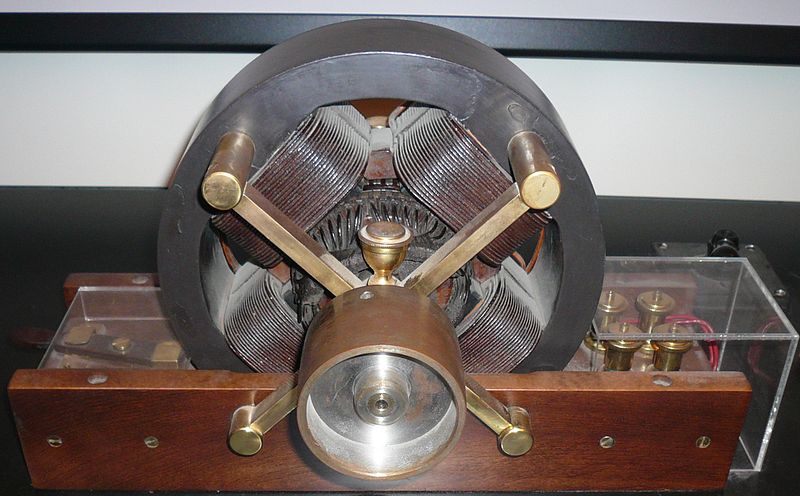
In 1886, free from the shackles of working for Edison, Tesla set up his own company with a view to developing and implementing radical ideas he had developed on the generation and transmission of AC electrical current but his investors would not give him the money to do so and eventually he was forced out of his own company. At this point, Tesla again found himself with no money and was forced to do hard labour in order to survive. Fortunately, after a few months he managed to convince two extremely wealthy New York businessmen to fund his research and set about constructing a purpose-built laboratory. A little over a year later Tesla had managed to create working prototypes of his famous AC induction motor and promptly sold the patents he had been granted to George Westinghouse for $60,000 plus a handsome royalty on all power generated using the motor. Tesla’s contributions to AC power generation and transmission, including the invention of the AC induction motor, are what made him famous and are arguably the most important of his career. Without his insight, many technologies that we take for granted today may not have ever existed.
The money gained from the sale of his AC patents allowed Tesla to conduct research in a wide variety of areas over the next ten years. He constructed two more labs in Manhattan and began to dedicate all of his time to researching the things that interested him most. During this period Tesla experimented with X-Ray’s and became the first person in America to produce an X-Ray image. He also demonstrated that it was possible to transmit information using Radio Waves which at the time was nothing short of revolutionary. It was around this time that Tesla began to play with the idea of wireless power transmission.
By 1897 George Westinghouse was practically bankrupt from the AC royalties that he had promised Tesla for every Horsepower of energy produced. He therefore managed to convince Tesla to give up his royalties in exchange for a lump sum payment of $216,000. This was an incredible sum of money at the time but was still a pittance compared to the alternative of having AC royalties coming in for the rest of his life. If Tesla had kept his royalties, it’s strongly believed that he would have become the world’s first billionaire well before John D. Rockefeller in 1916.
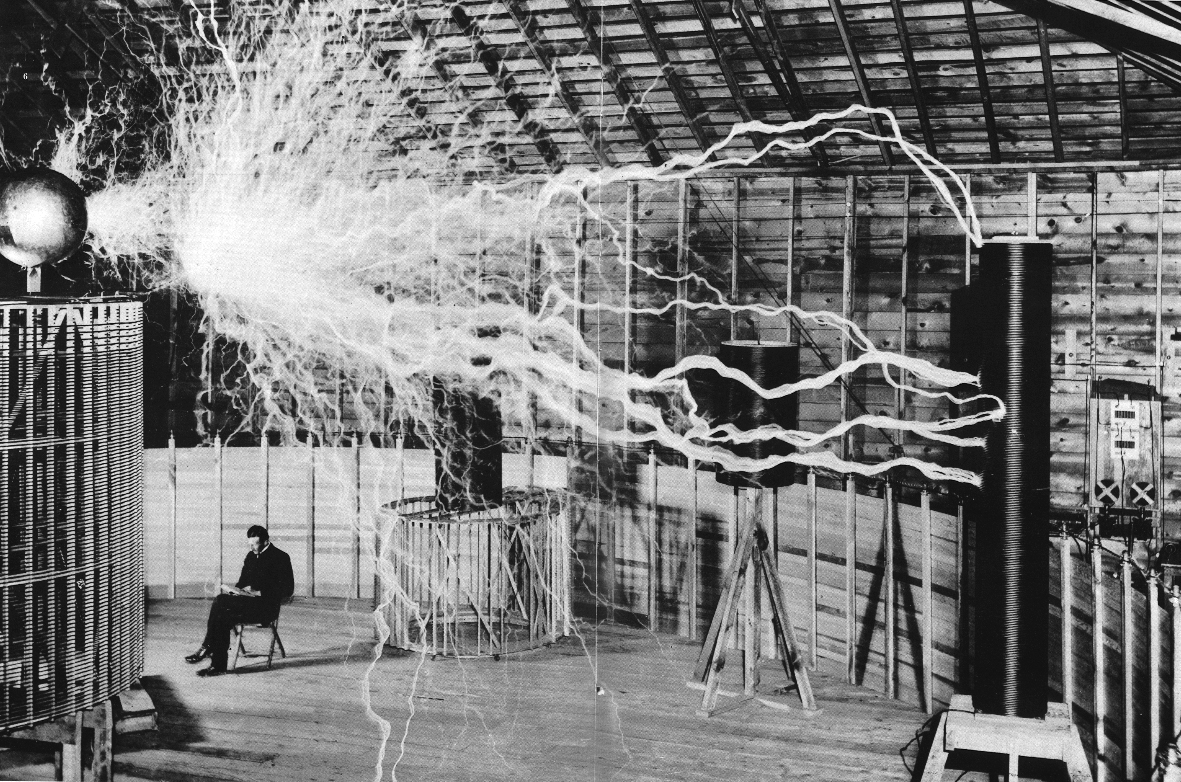
In 1899 Tesla outgrew his Manhattan labs and used the $216,000 from George Westinghouse as well as a $100,000 investment from John Jacob Astor IV to move some of his equipment to Colorado Springs and continue his groundbreaking work on the transmission of wireless power. While there, Tesla conducted experiments using immense amounts of energy which resulted in artificial lightening discharges 135 feet long and electricity conducted through objects 100’s of feet from his lab.
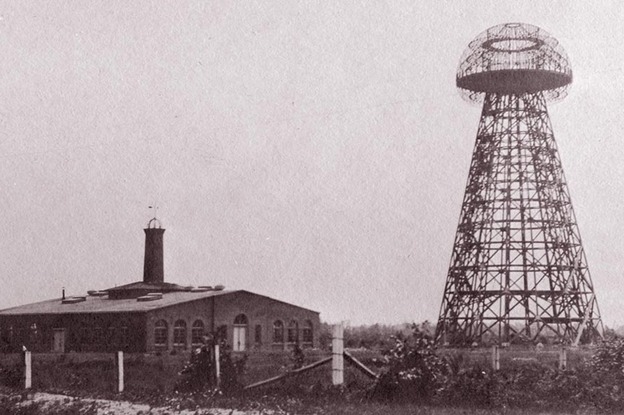
After terrifying the people of Colorado Springs for eight months, Tesla devised even grander plans for a giant trans-atlantic wireless telecommunications facility on Long Island. By 1904, he had built the 187 foot Wardenclyffe Tower, designed to not only send wireless messages across the Atlantic Ocean to Europe but also, Tesla claimed, to transmit wireless electrical power around the world, eventually allowing free access to electricity from anywhere on the planet. Unfortunately, after Marconi successfully transmitted a radio signal across the Atlantic at the end of 1901 and Tesla gradually lost all of his financial backers, he was forced to stop his groundbreaking research at Wardenclyffe having never fully realised his plans.
Tesla spent the remainder of his life trying to secure funding to continue his research but mainly proved unsuccessful due to the extreme economic uncertainty resulting from two world wars and a global financial depression. Tesla sadly died alone and impoverished on the 7th January 1943 in the New York hotel room in which he had been living for years.
It is impossible to overestimate the influence that Nicola Tesla’s ideas and engineering had on the world at the turn of the last century. He laid the foundations for some of the things that we simply take for granted today such as radar (without which the allies may well not have won WWII), x-ray imaging and what we know today as “radio”. Most important of all however was his contribution to AC electrical power generation, without which the free flow of electricity that the world enjoys today may not have ever been possible.
During the latter part of his life, Tesla repeatedly raised the idea of building a “death ray” which he claimed would be able to “bring down a fleet of 10,000 enemy war planes at a distance of 200 miles” and he hoped would therefore bring about world peace by means of mutually assured destruction. In the end, no government would entertain the idea and so because Tesla kept the blueprints to all of his inventions inside his mind, he took the plans for the “death ray” to his grave.
It is unclear how exactly the weapon would have worked, but the few written records that survive describe it as a device that fires a narrow beam of small tungsten pellets using electrostatic repulsion. This would provide a steady stream of particles containing huge amounts of energy that could easily be directed toward a range of targets. It is easy to label the idea of a “death ray” as morally reprehensible but one should first think about the time period in which it was being talked about, the 1930’s, and then consider whether a weapon of that power, in the hands of the “allies”, would maybe have deterred Germany from taking the aggressive path it eventually took. Therefore, one could argue that if an allied government had listened to Tesla, WWII could possibly have been avoided altogether.
Tesla’s mind and the way that it worked was truly extraordinary. He was known to have a photographic memory which enabled him to memorise the contents of complete books which no doubt helped him on his way to becoming fluent in eight languages including English, French, German and Latin. He was also able to visualise huge amounts of detail at one time entirely inside his mind. This meant that he always “built” a new invention inside his mind, visualising every single component separately, before actually commencing construction.
Tesla also occasionally experienced blinding flashes of light in front of his eyes which he said would then lead to visions of new ideas or solutions to complex mathematical and physical problems. He claimed that some of his best inventions and discoveries came to him this way.
Nikola Tesla was without doubt one of the most extraordinary people of the 20th century. Possessing great talent and ability, but more importantly using that ability to push the boundaries of what was thought possible in order to make the world a better place to live. He remained however, despite or perhaps even because of his world-changing discoveries, a deeply troubled individual, eventually dying with no money and few friends in a small New York hotel room. Tesla certainly didn’t receive the true gratitude he deserved while he was still alive, but I would argue that even to this day, Nikola Tesla is still not recognised as the true genius that he undoubtedly was.
 Fractalis - An ongoing journal